

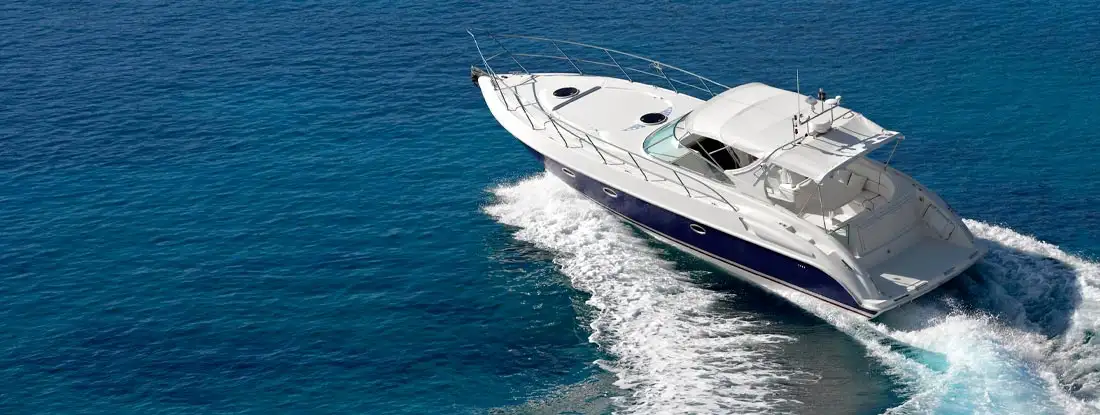
Performance and powerboats are a huge investment and come with tremendous risks for their owners. Though these vessels can offer rewarding leisure activities, their speed and power can quickly lead to accidents and other disasters. So, before you head out on the water in your new powerboat, you'll need the right kind of boat insurance to make sure you're protected if you get into a collision or your vessel is stolen or damaged.
A local independent insurance agent can help you compare quotes and find the best powerboat insurance coverage near you. They'll get you set up with the right speedboat insurance at a great rate. But first, here's a guide to high-performance boat insurance to help you get started.
Key Takeaways - Power Boat and Speedboat Insurance: 2026
Powerboats and other high-performance vessels require specialized coverage beyond what's included in standard boat insurance.
Liability coverage for powerboats can start at just $100 per year from certain carriers.
Only Hawaii, Arkansas, and Utah require powerboat insurance by law, but you may also need coverage if you dock at a marina or finance your vessel.
Working with a local independent insurance agent is strongly recommended, as they can shop and compare powerboat insurance from multiple carriers near you to find the best fit and rate.
Top Companies for Performance and Powerboat Insurance
You can find motorboat insurance from many different boat insurance carriers. However, we've put together a list of a few of our top recommendations for the best boat insurance companies of 2026:
- Progressive: Progressive offers boat insurance in all 50 states. The carrier's liability-only powerboat insurance policies start at just $100 per year.
- Foremost Insurance: Foremost also offers boat insurance in all 50 states. The carrier offers three tiers of savings packages (Saver, Plus, and Elite) to help keep your rates affordable.
- Nationwide: Nationwide offers complete boat insurance policies that include fishing equipment coverage and on-water boat towing and labor coverage. The carrier also offers several package options for weekenders, overnighters, light tackle anglers, and deep water pros, so you can customize your coverage and only get what you need.
- Hagerty: Hagerty is a confirmed specialty carrier for high-performance boats 26 feet or shorter with speeds ranging from 65-85 MPH. The carrier's policies include pollutant cleanup coverage and can be customized with flexible payment options and more.
A local independent insurance agent can help you find the best performance and powerboat insurance company in your area. These agents have access to specialty markets that are unavailable directly to consumers. They'll help you get set up with tailored powerboat insurance coverage for your unique vessel.
Is Performance and Powerboat Insurance Required?
Not in most states. Performance and powerboat insurance is designed for boats 26 feet or longer, with speeds from 65 to 120 MPH. However, only three states require boat insurance by law. Boat owners in Utah and Arkansas must have coverage for personal watercraft or for powerboats with 50HP or greater. Hawaii requires boats that are at least 26 feet long to be covered by at least $100,000 in liability insurance.
In other states, you're not technically required to have performance and powerboat insurance, but you may still need coverage. For example, if you dock your boat at a marina, you'll likely need at least boat liability insurance. Also, if you finance your boat, your lender will likely require you to have boat insurance.
Regardless, performance and powerboat insurance is the best way to protect yourself financially if you cause an accident or injure someone while operating your boat, or if your boat is damaged by events such as fire, severe storm, or vandalism. An independent insurance agent can help you get the coverage you need to minimize your risks. They'll review the speedboat insurance requirements by state to ensure you're in compliance.
What Does Performance and Powerboat Insurance Cover?
A performance and powerboat insurance policy typically includes protection for your hull and equipment, emergency towing, medical payments, liability, and more. There are several types of boat insurance included in most powerboat policies.
Hull and equipment coverage
This coverage helps you recover costs if your performance boat is damaged in a boating collision. It also covers personal property aboard your boat, such as cell phones, clothing, cameras, etc.
Emergency towing and assistance coverage
This covers the cost of a professional towing service if your vessel becomes disabled on the water.
Medical payments coverage
This pays for injuries suffered by you or your passengers after a boating accident, regardless of fault.
Boat liability coverage
This covers your financial responsibility for property damage and bodily injuries to others if you cause a boating accident.
Uninsured boater coverage
This covers you and your family members if you're injured in an accident caused by an uninsured or underinsured boater.
Pollution liability coverage
This covers your expenses if you are responsible for an oil leak or other pollution-related damage.
Water sports coverage
This covers water sports use of your powerboat, which may be otherwise excluded by many policies. Waterskiing, wakeboarding, and tubing are generally covered at no extra charge, while parasailing and kiteboarding are typically excluded.
Named storm and weather protection coverage
This can help cover the costs of protecting your powerboat in the event of a named storm watch or warning.
You can also add optional coverage for things like your boat trailer or boat lift. An independent insurance agent can help you select the coverage that best fits your needs.
Agreed value vs. actual cash value for powerboats
Powerboat insurance policies are available with agreed value or actual cash value (ACV) coverage. Agreed value policies set an amount that the insurer will pay out in the event of a total covered loss when the policy is written. This amount does not factor in depreciation. In contrast, ACV policies only pay your powerboat's current market value at the time of a total covered loss, and factor in depreciation.
High-value speedboats and high-performance vessels benefit the most from agreed value policies. An independent insurance agent can help you review your powerboat insurance coverage options. They can also help you determine if agreed value boat insurance is right for you.
Optional powerboat insurance coverages
Many carriers allow you to add coverage for your boat trailer, boat life, and boathouse to your powerboat insurance policy. This coverage can protect against physical damage, theft, vandalism, and other risks. You can also usually add mechanical breakdown coverage for the inboard and outboard upper and lower units.
Additionally, you can often add replacement cost coverage for personal effects such as phones, cameras, and gear, up to $10,000. Water sports equipment coverage is available from certain carriers for your skis, wakeboards, and kneeboards.
Finally, trip interruption coverage is offered as an optional add-on from some boat insurance companies. An independent insurance agent can help you complete your policy with all the speedboat insurance add-ons you need.
How Much Does Performance and Powerboat Insurance Cost in 2026?
High-performance boat insurance rates per year can average $100 for a policy with just liability coverage from certain carriers, such as Progressive. However, high-performance vessels require significantly higher premiums than other boats, due to their increased speed and accident risk.
As with most types of coverage, the cost of boat insurance depends on several factors, such as:
- The make, model, age, and value of your boat
- The length of your boat
- Your boat's engine size and power
- Your history of boating accidents
- Your location
- Your boating experience
- How you use your boat
- How often you use your boat
An independent insurance agent in your area can help you find affordable performance boat insurance rates near you.
How horsepower and speed affect your powerboat insurance rate
Most standard boat insurance policies are designed for vessels that reach speeds up to 65-75MPH. Boats that are capable of reaching higher speeds typically need specialized high-performance coverage, and these policies are underwritten differently than standard boat insurance. In general, higher horsepower equates to greater accident risk, which leads to higher insurance premiums.
Additionally, the high-performance boat classification typically applies to boats that are 26 feet or longer. Further, coverage for inland boating, such as on lakes and rivers, is typically much cheaper than for coastal use due to the increased hurricane and storm exposure. Your independent insurance agent can further explain powerboat insurance factors and help you compare speedboat insurance rates by horsepower.
Ways to save on powerboat insurance
There are several ways you can save on your powerboat insurance, such as by asking about common boat insurance discounts. These can include:
- State-approved boating safety course discounts
- Multi-policy bundling discounts (e.g., with homeowners insurance or auto insurance)
- Lay-up period or seasonal storage discounts
- Claims-free renewal discounts
- Safety equipment discounts (e.g., EPIRB, GPS, or Coast Guard-approved fire extinguishers)
- Original owner discounts
Available discounts vary by insurance company. If you store your boat during the off-season, be sure to ask your carrier about seasonal credits. An independent insurance agent can also help find and apply any boat insurance discounts you're eligible for. They know how to save on speedboat insurance from a reputable carrier in your area.

FAQs About Performance and Power Boat Insurance
What is high performance boat insurance?
This coverage is designed for boats 26 feet or longer and capable of speeds of 65 MPH and above. It differs from standard boat insurance in underwriting approach, speed and horsepower thresholds, and available coverage features, such as agreed value and mechanical breakdown. For a comparison across other vessel types, see our guide to boat insurance by vessel type.
How much does powerboat insurance cost per year?
A basic liability policy for a powerboat can start around $100 per year from some carriers. However, high-performance vessels command significantly higher premiums due to speed and accident risk. Exact costs vary by boat value, horsepower, location, and usage.
Do I need separate insurance for my boat trailer?
Boat trailer coverage is usually an optional add-on to your powerboat insurance rather than a separate policy. Some auto policies cover trailers while in transit only and don't extend to storage or launch-ramp incidents. A powerboat policy can typically extend coverage to the trailer whether it's in use, stored at home, or at a marina. Confirm availability with your carrier or independent insurance agent.
What states require powerboat insurance?
Utah, Hawaii, and Arkansas are the only states that require boat insurance by law. Utah requires coverage for personal watercraft and Arkansas requires it for powerboats with 50 HP or greater. Hawaii requires boats 26 feet or longer to have liability coverage.
However, most marinas require proof of liability coverage, and boat lenders require physical damage coverage. Even where not legally required, coverage is strongly advisable for high-value performance boats.
What is agreed value coverage for a powerboat?
Agreed value coverage pays the full amount agreed upon at policy inception if the boat is declared a covered total loss, with no depreciation deducted. This is particularly valuable for high-performance boats that may carry significant market value but cost substantial amounts to repair or replace. In contrast, actual cash value (ACV) policies factor in depreciation at the time of loss.
Does powerboat insurance cover water sports activities?
Most powerboat policies cover liability for waterskiing, wakeboarding, tubing, and kneeboarding at no extra charge. However, activities that involve towing someone through the air, such as parasailing or kiteboarding, are typically excluded. Always confirm covered activities with your carrier before heading out on the water.
Can I get a discount on powerboat insurance?
Yes. Common discounts include completing a state-approved boating safety course, bundling your boat policy with home or auto insurance, storing your boat during the off-season (lay-up discount), a claims-free renewal history, and having approved safety equipment aboard. Some carriers also offer an original-owner discount. An independent insurance agent can compare available discounts across multiple carriers to find the best combination for your unique vessel.
What does pollution liability cover on a powerboat policy?
Pollution liability covers the costs and expenses associated with an unintentional spillage of a contaminant, such as oil or fuel, from your vessel, including cleanup costs and third-party property damage. This coverage is especially relevant for high-performance powerboats with larger fuel tanks and more powerful engines.
How Can an Independent Insurance Agent Help Me Find Performance and Powerboat Insurance?
When you're ready to get set up with the right performance and power boat insurance, contact a local independent insurance agent. These agents can help you find the best policy for your needs at a rate you can afford.
They have access to specialty markets for high-performance boats, which provides an advantage over shopping with a single carrier or using a direct agent. And down the road, your agent can help you file boat insurance claims and update your coverage as necessary.
Sources
https://www.progressive.com/boat/powerboat-insurance/
https://www.foremost.com/insurance/boat/
https://www.nationwide.com/personal/insurance/boat/pages/coverage
https://www.hagerty.com/insurance/boat-insurance/small-craft-insurance
https://dlnr.hawaii.gov/dobor/insurance-requirement/