RV Insurance: Coverage, Costs, and Quotes in 2026
 Written by
How will this quote help me?
Your RV insurance quote is based on several common factors to give you a clear picture of the cost you can expect, though an independent agent can shop around and maybe even improve your rate!
NOTE: This quote is not final, though we did work with professional actuaries to help get you a ballpark figure to get started.

Recreational vehicles, or RVs, have been drawing lots of attention in recent years. RVs are no longer used only for occasional family trips; many people have traded their traditional homes for life on the road. As with any other investment, covering your RV with the right protection is critical. RV insurance can reimburse you for expenses related to collisions, lawsuits, theft, vandalism, weather damage, and much more.
A local independent insurance agent can help you find the right RV insurance coverage. They'll compare RV insurance quotes from multiple carriers to get you matched to the ideal policy for your unique motorhome. But first, here's an overview of RV insurance, what it covers, and more.
Key Takeaways - RV Insurance: 2026
Liability insurance is required for motorized RVs in most states.
If you finance your RV, your lender likely requires you to have collision and comprehensive coverage.
RV insurance rates range from about $480 to $3,000 per year, depending on the type of motorhome you have.
Working with a local independent insurance agent is strongly recommended, as they can shop and compare RV insurance quotes and coverage options from multiple carriers near you to find the best rate and fit.
Types of RVs and Motorhomes: Class A, B, C, and More
Before determining what type of motorhome insurance you need, you must understand how your vehicle is classified. RVs are often broken down into the following categories:
- Class A motorhomes: These are the largest RVs on the road and are essentially homes on wheels. Class A motorhome insurance typically comes with the highest premiums due to the higher value and larger size of these RVs.
- Class B motorhomes: These are smaller-sized RVs and more like nice-sized vans with amenities. Class B camper vans are typically the least expensive to insure of the three main motorhome classes due to their smaller size and lower value.
- Class C motorhomes: These are mid-sized RV models and are sometimes called mini motorhomes. Class C motorhome insurance rates typically fall between those for Class A and B RVs.
- Bus conversions: These refer to buses that have been converted into RVs. Also known as skoolies, they require a specialty type of coverage known as bus conversion insurance.
- Travel trailers: These are towable motorhomes that are typically attached by a trailer hitch. Travel trailers usually cost much less to insure than Class A, B, and C motorhomes.
- Fifth wheels: These are towable motorhomes that are attached to a truck with a fifth-wheel hitch. Fifth-wheel trailers also usually cost much less to insure than other RVs.
- Truck campers: These are add-on campers attached to a truck bed. Pop-up campers have the lowest average insurance rates of any type of motorhome.
When you talk to your independent insurance agent about your RV coverage needs, you'll start here. Once you've discussed your plans and needs, you can move on to the RV insurance coverages you need. Your agent can get you matched to the right travel trailer insurance or camper insurance.
Why Do You Need RV Insurance?
Most states require a liability policy at a minimum for motorized RVs to cover expenses related to third-party claims of bodily injury or personal property damage caused by you and your RV. Many states also require you to carry uninsured/underinsured motorist coverage in case you're hit by another driver who doesn’t have enough insurance to pay for their portion of the damages.
An RV is a unique combination of part home and part vehicle. RVs allow their owners to enjoy and combine comfort and luxury with mobility. Despite being on wheels, an RV includes homey comforts like beds, dishes, TVs, and refrigerators. As such, your RV needs an insurance policy tailored to protect all of its unique components and exposures.
But beyond that, a few recent stats may encourage you to get the right coverage for your RV:
- An estimated 8.9 million people in the U.S. own an RV.
- There are about 500,000 accidents every year due to trailer sway.
- About 75,000 hospitalizations each year result from RV collisions.
- About 10% of all RV drivers are seniors.
- About 26 people die every year due to RV collisions.
RV insurance is also often mandatory. If you've financed your RV, the lender most likely requires you to have certain types of RV insurance, such as collision and comprehensive coverage. If you've been asking, "Do I need RV insurance?" a local independent insurance agent can help you review RV insurance requirements by state.
What Does RV Insurance Cover?
An RV insurance policy can cover several possible hazards. For convenience, some RV owners add coverage to their personal car insurance policies. However, choosing this option can leave you with coverage gaps. Further, some car insurers won't even allow you to insure an RV on their policies. As such, having a specific RV insurance policy is often recommended.
A major factor in determining the type of coverage you need is considering how you plan on using your RV. If you only use your RV for seasonal trips or as a permanent residence without moving it, you probably don't need as much protection as you would if you constantly travel on the road.
So, what does RV insurance cover? Here are several of the most common RV insurance coverage options that are available:
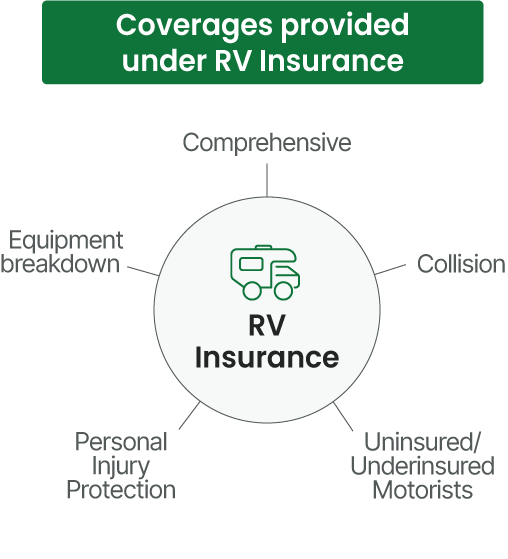
- Liability insurance: Covers the costs associated with lawsuits arising from third-party injuries or property damage you're responsible for after an accident. For example, if a guest slips and falls on your RV and is injured, liability insurance could cover the associated costs of the incident.
- Collision insurance: Pays for damage to your RV from a collision with another object, regardless of fault. For example, if you back your RV into someone's fence, collision insurance could help pay for the damages.
- Comprehensive insurance: Pays for damage to your RV due to a non-collision event such as a flood or theft. For example, if someone vandalized your RV at a campsite, comprehensive insurance could help pay for the repairs.
- Personal injury protection insurance: This covers medical expenses, lost wage replacement, and various other expenses for you and your passengers if you get injured in an accident, regardless of fault. This coverage is not available in every state.
- Medical payments insurance: This covers the costs of medical treatments if you get injured in an accident, regardless of fault.
- Uninsured/underinsured motorists insurance: This can reimburse you for expenses after an accident with another driver who doesn't carry adequate insurance to reimburse you properly. This coverage can also reimburse you if you're the victim of a hit-and-run accident.
An independent insurance agent can help you build an RV insurance policy that includes all the necessary types of coverage.
Optional RV Insurance Add-ons Worth Considering
You may want to add a few other types of protection to your RV insurance policy beyond the basics. These can include:
- Total loss replacement coverage: Pays to replace your RV in the event of a total loss.
- Physical damage coverage: Covers physical damage to or the theft of your RV.
- Pet injury coverage: Covers vet fees for an injury to an animal aboard your RV, regardless of fault. This coverage is tied to active comprehensive and collision coverage.
- Breakdown assistance Covers expenses related to professional towing and roadside assistance services if your RV breaks down or you get stranded on the road.
- Attached accessories coverage: This provides reimbursement for repairs or replacements of antennas and awnings.
- Personal effects coverage: Covers personal property like dishes and sporting equipment in your RV.
- Vacation liability coverage: Covers the cost of third-party bodily injury or property damage that occurs when the RV is used as a temporary residence. Coverage is typically available with limits of $10,000 to $100,000.
Your independent insurance agent can recommend any additional types of optional RV insurance coverage that you may benefit from.
What RV Insurance Does Not Cover
RV insurance coverage comes with several exclusions that are important to be aware of before you ever try to file a claim. Some common RV insurance exclusions are:
- Normal wear and tear
- Mechanical breakdown (without mechanical breakdown insurance)
- Routine maintenance
- Mold or rot damage
- Earthquake damage (depending on the carrier)
- Damage from neglect
An independent insurance agent can help review the specific coverage exclusions listed on your RV insurance policy.
Full-Time vs. Part-Time RV Insurance: What's the Difference?
People who live in their RV as a permanent residence for at least six months per year are considered "full-timers" and require specialized coverage. Full-time RV insurance includes personal liability coverage, personal property or personal effects coverage, emergency expense coverage, and loss assessment coverage. Full-time RV insurance costs an average of 20%-40% more than recreational policies. For a full breakdown of coverage options and costs, see our full-time RV insurance guide.
Part-time RVers can sometimes reduce their coverage during storage or off-season. For example, some carriers allow recreational users to pause their collision coverage while keeping their comprehensive coverage active. Many of these carriers offer seasonal storage discounts.
How Much Does RV Insurance Cost in 2026?
RV insurance costs range from $480 to $3,000 per year, depending on the type of motorhome you have and other factors. Class A motorhome insurance costs range from $600 to $3,000 per year. Class B motorhome insurance ranges from $480 to $1,000 per year, and Class C motorhome insurance averages $540 to $1,500. A liability-only policy for an RV can cost as little as $125 per year.
Travel trailers and campers cost much less to insure than other motorhomes, with average insurance rates ranging from $180 to $1,000. Pop-up campers are the cheapest to insure, with average premiums ranging from just $200 to $550 annually.
However, RV insurance costs can vary depending on all of the following factors:
- RV type
- Usage (i.e., recreational vs. full-time)
- Location
- Driving history
- Claims history
- Coverage levels and deductible
If you're still asking, "How much is RV insurance?" a local independent insurance agent can help compare exact quotes in your area.
How to Save on RV Insurance
Before you compare RV insurance quotes, be aware that there are several easy ways to save money on your policy. Try any of these simple strategies to reduce your RV insurance costs:
- Bundle your coverage: Buying RV insurance and home insurance or auto insurance from the same carrier can help you earn a bundling discount with many carriers.
- Maintain a clean driving record: Staying accident- and traffic-violation-free for several years can help you earn a safe driver discount from many carriers.
- Install anti-theft or safety devices: Protecting your RV with these devices can reduce the risk of theft and accidents and help you earn discounts from many carriers.
- Complete an RV safety course: Completing an approved RV safety course can help you earn a discount from certain carriers.
- Request a seasonal storage discount: Storing your RV during the off-season can help you earn savings with many carriers.
- Increase your deductible: Choosing a higher deductible can lead to lower premium rates, but keep in mind you'll have to pay more out of your own pocket if you file a claim.
Independent insurance agents can compare RV insurance discounts from multiple carriers simultaneously and help you get RV insurance quotes to help you maximize your savings.
FAQs About RV Insurance
What is RV insurance and do I need it?
RV insurance is similar to car insurance but is designed to protect the unique components and exposures of recreational vehicles. It covers collision, theft, weather damage, and liability claims. Most states require you to have liability coverage for motorized RVs, but lenders require collision and comprehensive coverage for financed RVs. If you've been asking, "Do I need RV insurance?" you can customize your RV policy as you wish, but it should at least include liability coverage.
What does RV insurance cover?
RV insurance can cover many of the same risks your car insurance does, like collision, comprehensive, and liability coverage. However, because RVs also serve as mobile residences, you can add protection for personal belongings, equipment, vacation liability, roadside assistance, and attached accessories like awnings and satellite dishes.
An independent insurance agent can help you get set up with all the additional RV insurance coverage you need. If you're still asking, "What does RV insurance cover?" ask your agent to review your policy with you.
How does RV insurance work?
Your RV insurance coverage can provide critical reimbursement after an accident or another covered disaster. RV insurance can potentially cover you in the following ways:
- If you have uninsured/underinsured motorists coverage and another driver hits you but is not insured, your insurance company can reimburse you for the other driver's portion of the damages.
- If you're at fault for an accident, the other driver will file a claim with your insurance company, which will pay the claim up to the limits of your liability coverage. You will pay the costs of any damages, injuries, legal fees, or judgments out of pocket beyond the limits set on your policy.
- If your RV is disabled after a crash and has to be towed, your insurance can cover some or all of the towing costs. However, you'd need to have added towing and roadside assistance coverage to your policy to get reimbursed.
- If your RV gets stolen or is damaged due to a hailstorm, your comprehensive insurance can reimburse you for your loss up to your policy's limits after you've paid your deductible.
How much does RV insurance cost per month?
Travel trailers cost an average of $15 to $83 per month to insure, while Class A motorhomes cost between $50 and $250. So, how much is RV insurance? The average cost of RV insurance can vary based on many different factors. These can include the make and model of the RV you own, how often you plan to use it, your driving record, and your prior claims history.
Is RV insurance required by law?
Liability coverage for an RV is required in most states. Certain states also require other types of coverage by law, such as uninsured/underinsured motorist coverage. Further, if you finance your RV, your lender likely requires you to have collision and comprehensive coverage. A local independent insurance agent can help you review RV insurance requirements by state.
How much RV insurance do I need?
The amount of RV insurance coverage you need depends on several factors, like:
- Your state's requirements
- Your RV's motorhome classification
- Your location
- How often the RV is used
- The motorhome's features and amenities
For help determining how much RV insurance you'll need, contact an independent insurance agent who can help you learn about the requirements in your state and the specific risks you may face.
Does my car insurance cover RV rentals?
Typically, yes, your existing car insurance can cover an RV rental. Depending on your policy, though, your car insurance may only cover driving-related accidents with the rented RV. In some instances, your whole personal auto policy may extend to an RV rental, including your liability, collision, and comprehensive coverage.
Does my car insurance cover my RV?
In some cases, your car insurance will cover an RV, but only if it's trailered. In these cases, your auto liability insurance, which covers damage or injuries you cause in an accident, usually extends to your RV. Your auto insurance won't cover physical damage to the RV or trailer unless you specifically add RV or trailer coverage to your car insurance policy.
What discounts are available on RV insurance?
There are many different RV insurance discounts available, but the options will vary by carrier. You might be able to earn a discount and save money on your policy by bundling your coverage, completing a safe driving course, installing anti-theft devices, storing your RV during the off-season, remaining claim-free, or having an affiliation with a specific group. These discounts can help significantly reduce your RV insurance rates.
How do I get an RV insurance quote?
The fastest way to compare RV insurance quotes from multiple carriers simultaneously is by working with an independent insurance agent. With access to multiple insurance companies, independent insurance agents are unlike any other type of agent out there. They’ll help find you the best RV insurance coverage options and competitive rates in your area.
Where can I get the best RV insurance?
RV insurance is available from many carriers. However, working with an independent insurance agent can help you get the coverage you need, fast. Your agent can shop and compare RV insurance quotes from multiple insurance companies for you.
What's the difference between full-time and part-time RV insurance?
Full-time RV insurance policies (for those living in their RV 6+ months per year) include personal property and personal liability coverage not found in standard part-time policies. Learn more in our full-time RV insurance guide, including costs and top carriers.
Get Help Now from an Independent Insurance Agent Near You
Independent insurance agents can help you find the right RV insurance policy. They can shop and compare policies and quotes from multiple carriers for you. Ultimately, they'll get you matched to a policy that offers the best overall blend of coverage and cost. And down the road, your agent can help file RV insurance claims for you and update your coverage as necessary.