

Water damage of any kind can be a nightmare for homeowners. When the water comes from a roof leak, damaging the roof and perhaps other property inside your home, you’ll be faced with a costly repair of roof—at best.
Will your homeowners insurance help you pay for the repairs or any other damaged property after a roof leak? The answer is: yes, sometimes. Here we will explain how your home insurance policy applies to roof leaks.
To learn more about coverage for roof leaks, and to make sure you’ve got the best homeowners insurance for your needs, contact a local independent insurance agent.
Key Takeaways - Does Homeowners Insurance Cover Roof Leaks?
Homeowners insurance might cover a roof leak depending on the cause. Sudden, accidental damage is typically covered, while regular maintenance issues are not.
Roof leaks due to age, poor maintenance, or normal wear and tear are usually not covered by home insurance.
Homeowners insurance may also cover damage to the interior of your home and your belongings caused by a roof leak, depending on the circumstances.
Performing regular maintenance on your roof and fixing any problems as soon as they arise can help you avoid roof damage that’s not covered by insurance.
What Causes Roof Leaks and Why Does it Matter for Insurance?
Roof leaks can be caused by a variety of problems, from severe weather to simple wear and tear. The cause of your roof leak is the answer to when and how it will be covered by your home insurance. Sudden, accidental damage is typically covered, while regular maintenance issues are not.
Here are some of the most common causes of roof leaks:
- Cracked flashing
- Broken or missing shingles
- Improper valley sealing
- Damaged vent seals
- Ice dams
- Clogged gutters
- Damaged chimneys
- Excess attic moisture
- Physical damage from walking on the roof
- Age and lack of maintenance
- Improperly installed skylights
- Severe weather events
Roof leaks that are caused by a “covered peril” (a cause of damage that is explicitly outlined in your policy) will be covered by your homeowners insurance.
When Does Homeowners Insurance Cover Roof Leaks?
Homeowners insurance typically covers roof leaks or other kinds of roof damage, but your coverage entirely depends on the cause of the damage. If your roof damage or roof leak is caused by a falling tree or a lightning strike, you’d likely have coverage.
But if your roof is leaking simply because it’s old or poorly maintained, home insurance will not help you pay for repairs. Here’s a deeper dive.
What is a covered peril?
Your homeowners insurance will only cover roof leaks if the damage is directly caused by a covered peril, such as a storm or falling tree. It’s important to understand what type of policy you have and what it does and doesn’t cover, so you're prepared when you have a loss.
Here are some of the sixteen perils typically covered by homeowners insurance:
- Fire or lightning
- Windstorm and hail
- Explosions
- Riot or civil commotion
- Damage caused by aircraft
- Damage caused by vehicles
- Smoke
- Volcanic eruption
- Vandalism and malicious mischief
- Theft
- Falling objects
- Weight of snow, ice, or sleet
- Accidental discharge/overflow of water
- Sudden tearing/cracking of appliances
- Freezing
- Power surges
If your roof leak is directly caused by one of these, your policy would likely cover the cost of repairs. For example, if your roof leaks after the shingles are damaged by a hailstorm, you’d likely have coverage from your home insurance. Similarly, if a storm causes a tree to fall on your roof and creates a leak, your home insurance would likely cover the damage.
Which Roof Leak Scenarios Are Typically Not Covered?
The following roof leak scenarios are typically not covered by homeowners insurance:
- Normal wear and tear: Every roof will deteriorate over time. Leaks caused by the effects of normal wear and tear won’t be covered by your home insurance.
- Lack of maintenance: It’s up to you as the homeowner to make sure your roof is properly cared for and that any necessary repairs are made in a timely manner. You need to replace missing shingles, clear debris, and perform any other general upkeep tasks. If your roof leaks due to a lack of maintenance, your insurance company will not cover the repair costs.
- Mold and rot damage: A leak that’s caused by mold due to a long-term moisture problem won’t be covered by your homeowners policy. You might have coverage if the mold is caused by a sudden, covered event.
- Poor roof installation: If your roof was installed improperly or poorly, or if the roofing contractor used defective materials, you won’t have coverage for any resulting leaks.
- Flooding and earthquakes: Most standard homeowners policies exclude coverage for any damage (including roof leaks) caused by a flood or an earthquake. You can purchase separate flood or earthquake insurance if you live in an area where these catastrophes are a concern.
- Pest or animal activity: Roof leaks caused by rodents, birds, or insects are generally considered maintenance problems and are not covered by homeowners insurance.
One of the most important things you can do as a homeowner is to make sure your home is properly maintained and that repairs are made in a timely manner.
How Does Dwelling Coverage Apply to Roof Leak Claims?
Dwelling coverage is the portion of your homeowners insurance policy that applies to roof leak claims. It protects your home’s structure when it’s damaged by a covered peril, and can help you pay to repair or replace the roof structure in the event of a covered loss.
If you have a major leak and other areas of your home are involved, additional parts of your coverage may apply as well:
- If any of the contents of your home are damaged or destroyed because of a covered roof leak, the personal property coverage portion of your home insurance policy would pay for repairing or replacing damaged possessions.
- If you must temporarily move out of your home while the roof is being repaired, your policy’s loss of use coverage may pay for certain ongoing living expenses (lodging, food, etc.) while you’re displaced.
- If the roof of a separate structure, like a garage, is damaged by a covered peril, the other structures coverage in your home insurance policy would apply to the claim.
Keep in mind that your coverage is subject to your deductible. That is the amount that you have to pay out of your own pocket before your policy kicks in.
Does Insurance Cover Water Damage Caused by Roof Leaks?
If your roof leaks after a hailstorm, your policy would likely cover the necessary repairs to the roof itself, as well as damage to interior walls, ceilings, and floors. What’s more, if any of the contents of your home (furniture, clothing, etc.) are damaged or destroyed because of a covered roof leak, the personal property coverage portion of your home insurance policy would pay for repairing or replacing the damaged belongings.
If mold grows as a result of a covered roof leak, your homeowners insurance may help cover the cost of mold remediation, up to the limits set in the policy.
What’s the Claims Process for a Roof Leak?
Filing a claim usually requires documenting the damage, meeting with an adjuster, and showing that a covered event caused the leak.
Here are some steps to take when you first notice the leak:
- Document the damage. Take photos of visible damage as soon as possible (be sure it’s safe). Be sure to date your documentation and note if a weather event was present when the damage occurred.
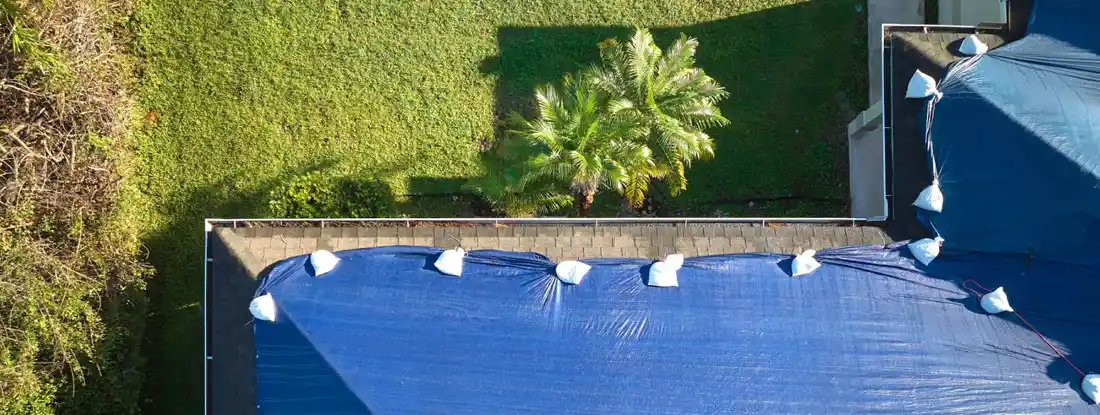
- Take immediate action to prevent further damage. This might include placing a tarp over the leak, moving interior belongings out of the way, and placing buckets under leaking areas.
- Notify your insurance company or insurance agent as soon as possible. Your insurance company will assign a claim number and an adjuster. Be sure to ask about timelines and what’s expected of you to ensure the claim is paid in a timely manner.
- Keep records of all expenses and repairs. Document everything to make sure you are appropriately compensated.
- Schedule a professional roof inspection. A licensed roofing contractor can help you document the cause of the leak and the extent of the damage. The inspector can also estimate the cost of repairs.
Claims that are found not to have been caused by a covered peril will be denied.
Important Exclusions and Limitations to Know Before Filing
Before you file a claim, keep in mind that certain types of losses are nearly always excluded from homeowners insurance coverage. These include:
- Damage caused by gradual leaks
- Damage caused by neglect or poor maintenance
- Damage caused by age or wear and tear
- Damage caused by mold resulting from longstanding moisture
- Damage caused by flooding
- Damage caused by pest infestations
If you’ve been ignoring your roof for years, don’t expect your homeowners policy to come to your rescue. Roof leaks caused by sudden, unexpected damage may be covered, while longstanding or preventable problems will not.
Can You Upgrade Your Policy for Better Roof Protection?
You can upgrade your homeowners insurance policy for better roof protection.
Some insurers offer policy add-ons that provide broader protection against roof-related losses.
- Extended replacement cost coverage: Covers the full cost of replacing your home's roof, even if it exceeds your policy's limit.
- Guaranteed replacement cost coverage: Ensures your roof is replaced at full value, regardless of depreciation.
- Ordinance or law coverage: Covers any additional costs if your local building codes require upgrades during a roof repair or replacement.
- Windstorm or hail endorsement: Provides extra coverage if you live in an area prone to severe weather and windstorms (e.g., coastal areas). In some of these areas, wind and hail damage may be excluded from the basic homeowners policy, and the windstorm endorsement is necessary to fully protect your home.
Check with your independent insurance agent to see if these add-ons are available from your insurance company.
How Does Your Roof’s Age Affect Insurance Coverage?
Older roofs are more prone to wear and tear, leaks, and structural issues, making them a higher risk for insurers. The age of your roof can impact both coverage eligibility, rates, and claim payout amounts.
- If your roof is very old, it may be difficult to find an insurance company to cover it.
- Homes with older roofs might cost more to insure than homes with newer roofs.
- As your roof ages, your insurance company may switch your coverage from replacement cost (the cost to repair the roof with similar materials at today’s prices) to actual cash value (the cost to replace your roof including depreciation).
For this reason, insurance companies often offer discounts for roofs that are newer and that use more durable materials such as those that are impact or fire resistant. In fact, having a new roof might help you reduce your home insurance premiums by 5% to 35%.
How an Independent Insurance Agent Can Help You Get a Quote for Homeowners Insurance
Independent insurance agents can help you get multiple quotes for homeowners insurance. These agents work for you, not the insurance company. They can help you shop around to find the best coverage for your needs and budget.
And independent agents can help you understand your coverage, file claims, and keep your coverage up to date as your circumstances change.
Top 5 FAQs for Homeowners Insurance and Roof Leaks
Does homeowners insurance cover roof leaks from storms or hail?
Yes, homeowners insurance covers roof leaks if they’re caused by a sudden, unexpected event like hail, wind, or storms.
Will insurance cover roof leaks from normal wear and tear?
No, roof leaks caused by gradual deterioration, normal wear and tear, or lack of maintenance are not covered by homeowners insurance.
Are water-damaged belongings from a roof leak covered?
Yes, water-damaged belongings from a roof leak can be covered if the leak was caused by a covered event. The dwelling coverage portion of your policy would cover any structural damage caused by the roof leak, while the personal property coverage portion of the policy would cover any damage to the contents of your home.
How can you improve your claim approval chances?
The best ways to improve your claim approval chances are to take immediate action when you notice the leak, maintain impeccable records, provide photos, and contact your insurance company immediately. And keeping up with regular roof maintenance will also help ensure your claim is approved. If your roof is properly maintained, the leak likely can’t be blamed on negligence or normal wear and tear.
What if your claim is denied for a roof leak?
If your claim for a roof leak is denied, ask for an explanation and consider an appeal. In the future, consider adding endorsements for extra coverage, and speak to an independent insurance agent about eliminating any gaps in coverage.
Sources
https://www.angi.com/articles/will-a-new-roof-lower-insurance.htm?form=MG0AV3&utm_source=libertymutual&_utm_medium=referral&_utm_campaign=libertymutual_resources