


Even the safest drivers on the road can find themselves in a fender bender or other accident. If that happens, it's critical to have the right protection for your vehicle. That means having collision insurance.
Luckily, an independent insurance agent can help you get equipped with the right collision coverage long before an accident ever occurs. They'll make sure you have all the auto insurance you need. But first, here's a deep dive into collision auto insurance and what it covers.
Key Takeaways - What Is Collision Insurance?
Collision insurance pays for damage to your car from a collision with another object, regardless of fault.
Collision insurance does not cover theft, vandalism, fire, or other threats, which are covered by comprehensive insurance.
Collision insurance isn't required by law, but it may be required for an auto loan or lease by a lender.
Full coverage car insurance refers to a policy that includes liability, collision, and comprehensive coverage.
Working with a local independent insurance agent is highly recommended, as they can help shop and compare quotes and coverage options for you from several carriers.
What Is Collision Insurance?
The meaning of collision insurance is coverage that pays for damage to your car from a collision with another vehicle or object, regardless of fault. Collision insurance is one component of a full car insurance policy that covers the cost of repairs if your car collides with another vehicle or object like a telephone pole, guardrail, pothole, or mailbox.
Collision insurance covers most types of collisions, except for those with large animals like deer. To cover that kind of collision, you'd need comprehensive insurance.
Collision insurance isn't one of the types of car insurance typically required by state law. But it's still an important coverage to have to protect your vehicle from potentially costly repairs, and it's often a component of full coverage car insurance.
Without collision coverage, you could end up paying out of your own pocket for damage to your vehicle after an accident. Whether you're involved in an at-fault accident, get hit by an underinsured driver, or are the victim of a hit-and-run, collision insurance can reimburse you for costly physical damage to your car.
What Does Collision Insurance Cover?
As the name suggests, it covers costs related to collisions with other motorists' vehicles or with objects such as posts and fences. This insurance can pay for damage caused by many types of incidents, such as if you rear-end another vehicle at a stop light, get into a single-vehicle rollover accident, or hit a guardrail. It can also pay for damage if you swerve to avoid a vehicle and hit a tree, or if someone runs a red light and hits your vehicle.
Collision insurance helps you pay for vehicle repairs or a replacement, and if you’re leasing your car or still paying it off, it also helps cover any debt if your vehicle gets totaled. Here's a breakdown of what collision insurance covers and doesn't cover.
What's covered (and not covered) by collision insurance
| Covered: | Not Covered: |
|---|---|
| Traffic collisions with other cars | "Other than collision" threats like vehicle theft, storm damage, etc. |
| Collisions with objects like telephone poles and fences | Costs of repairs to another driver's vehicle after a collision |
| Collisions with potholes and other road obstructions | Collisions with large animals like deer |
| Certain accidents like rolling your car into a ditch | Personal injury costs or medical payments |
| Skidding on ice | Keying or vandalism to your vehicle |
While collision insurance can help pay to replace your car if it gets totaled in an accident, keep in mind that your coverage comes with certain limits. Often, collision insurance will only pay for your car's actual cash value, which factors in depreciation. To make up for the difference in what you might owe your lender on a car loan, consider getting gap insurance.
How Does Collision Insurance Work After an Accident?
Collision insurance reimburses you for covered damage to your vehicle after a collision with another object or vehicle, regardless of fault, after an accident. If you've been wondering how to file a collision insurance claim, just follow these easy steps:
- Contact your carrier or independent insurance agent: Call your agent or insurance company right away to report the accident and initiate the claims process. You'll need to tell them all the details about the incident and your insurance information.
- File a police report: Your insurance company will most likely request a police report number, so make sure to report the accident right away to the local authorities.
- Schedule an adjuster review: Work with your insurance company or agent to schedule a visit from a claims adjuster to assess the damage to your vehicle in person.
- Schedule repairs: Your insurance company will provide you with a list of shops in its network for you to choose from to schedule your vehicle's repairs.
- Receive payment: After you've paid your deductible, you'll receive any reimbursement from your claim that was approved by your adjuster. If your car was totaled, you may receive a payout for its actual cash value, depending on your policy's terms.
Your independent insurance agent can also file a collision insurance claim for you and walk you through the entire process, all the way through reimbursement. Typically, claims are resolved within 21 days if it's clear who was at fault.
Do I Need Collision Insurance?
Not by law, no. Though you typically don't need collision insurance by state law, going without a vehicle after an accident can disrupt your daily life. Having collision insurance limits the time you’ll spend carless after an accident. However, having collision insurance doesn't always make sense for everyone.
When collision insurance may not be worth it
- You drive a car with a replacement cost that would be cheaper than your annual premiums.
- You have enough disposable income that you could easily pay out of pocket in an accident.
- Your vehicle's value is less than $3,000.
- Your annual premiums would be more than 10% of your vehicle's value, also known as the 10 percent rule for collision insurance.
If you don't fall into any of these categories, though, collision insurance is highly recommended. Without collision coverage, you would need to pay out of pocket for any collision damage to your car.
If you've been asking, "Do I need collision insurance on a paid-off car?", still consider the criteria listed above. Your independent insurance agent can help you determine if collision insurance is a good fit for you.
Is Collision Insurance Required by Law?
No state requires collision insurance by law, but lenders and lessors often require collision coverage until your vehicle's loan or lease is paid off. Most states require property damage liability and/or bodily injury liability insurance as their minimums, while others might require uninsured/underinsured motorist coverage or personal injury protection coverage. Still, about 77% of drivers choose to carry collision coverage anyway.
Car dealerships and banks often require you to have collision insurance if you lease or are otherwise still paying off your car. Collision insurance for a leased car is almost always required in the contract. Understanding the difference between collision and comprehensive insurance is also important.
Another important coverage not required by law is comprehensive, or other than collision, coverage. Along with collision insurance, these are both critical coverages to consider.
- Comprehensive insurance: Pays for damage to your car due to a non-collision event such as a flood or theft.
- Collision insurance: Pays for damage to your car from a collision with another object, regardless of fault.
An independent insurance agent can explain even further why it's imperative to consider adding collision and comprehensive coverage to your car insurance policy. They can also further explain the differences between collision insurance vs. comprehensive insurance.
Collision Insurance Deductibles Explained
Your policy's deductible is the amount you're responsible for paying out of pocket before receiving reimbursement from an approved claim. Collision insurance deductibles typically range from $100 to $2,000, with the most common selection being $500.
Collision deductible $500 vs. $1,000
Increasing your collision insurance's deductible from $500 to $1,000 can cut your premiums by up to 20%. However, if you get into an accident and need to file a collision claim, you'll be responsible for paying twice the amount out-of-pocket that you would have before.
Choosing the right deductible amount
When deciding what amount of deductible to choose, consider whether you'd like to save money on your monthly premiums or have a larger safety cushion provided by your insurance coverage. It's important to select a deductible amount you're confident you could pay out of your own pocket if necessary.
Many people choose a deductible between $500 and $1,000, but you may want to choose a lower amount if you're unsure you could afford to pay this much in the event of an accident.
Collision Insurance vs. Comprehensive Insurance: What's the Difference?
Collision insurance covers damage from collisions with objects and other vehicles, while comprehensive insurance covers damage from perils other than collisions. To complete your car insurance policy, you might want to consider adding comprehensive coverage in addition to collision insurance. That's because comprehensive insurance can pay for additional threats that can damage your vehicle other than collisions, including floods, vandalism, theft, hail, break-ins, and much more.
| Scenario | Collision Insurance Covers? | Comprehensive Insurance Covers? |
|---|---|---|
| Damage from other vehicles in a collision | Yes | No |
| Damage from other objects in a collision | Yes | No |
| Contact with animals | No | Yes |
| Natural disasters | No | Yes |
| Riots and vandalism | No | Yes |
| Theft of your vehicle or its contents | No | Yes |
| Fire damage | No | Yes |
| Broken windshield | No | Yes |
Without comprehensive insurance, you might not have coverage to pay to repair your vehicle's physical damage if you weren't involved in a collision.
How Liability Coverage Differs from Collision and Comprehensive
If you've heard the term "full coverage" car insurance, though it's not a standard industry term, it often refers to a combination of collision insurance, comprehensive insurance, and liability insurance. There are two major forms of liability coverage under car insurance:
- Bodily injury liability: Pays for injuries to other drivers and their passengers if you cause an accident.
- Property damage liability: Pays for damage to a third party's property if you hit it with your vehicle.
While collision and comprehensive coverage are meant to cover damage and destruction to your own vehicle, liability coverage is meant to protect others, including other drivers, pedestrians, etc. It can also cover your defense costs if you are sued for damages. An independent insurance agent can help you choose between liability vs. full coverage car insurance.
How Much Does Collision Insurance Cost in 2026?
The average cost of collision insurance in 2026 is $464 per year, or about $38.58 per month. Collision insurance is just one part of a complete car insurance package. However, the cost of your overall car insurance policy can depend on several factors, including:
- Your vehicle's make and model
- Your vehicle's age and value
- Your location (ZIP code)
- Your driving history
- Your credit score (where allowed)
- Your age and gender
- Your annual mileage
Not all states allow car insurance rates to be based on some of these factors, including gender and credit score. Also, keep in mind that your car insurance policy comes with various deductibles, and you'll have to pay these amounts out of pocket before you receive any reimbursement from your coverage after filing a claim.
An independent insurance agent can help you find exact quotes for car insurance in your area. Depending on your situation, you may also qualify for some car insurance discounts.
When Should You Drop Collision Coverage in 2026?
You might consider dropping your collision insurance if your vehicle is paid off, you drive a vehicle that's worth less than $3,000, or your annual policy premiums would exceed 10% of your vehicle's actual cash value. It's also helpful to consider if you have enough money in your savings to cover the cost of an accident if you lack collision insurance.
| When to Drop Collision Coverage |
|---|
 Your vehicle is paid off
|
|
Your vehicle's value is less than $3,000
|
|
Your annual premium would exceed 10% of your vehicle's value
|
|
You have enough emergency savings to cover an accident without collision insurance
|
The 10% rule for dropping collision coverage
Here's an example of the 10% rule for dropping collision coverage:

DID YOU KNOW?
Your car's actual cash value is $6,000, and the annual premium cost is $900, which is 15% of the total value.
In this case, it makes sense to drop your collision coverage, since the cost of the insurance surpasses the recommended 10% threshold of your vehicle's actual cash value.
Collision Insurance for Leased and Financed Vehicles
Auto lenders typically require you to have collision insurance until your loan is paid off or your lease term ends. Your vehicle's actual cash value, or ACV, refers to its current market value, which factors in depreciation.
Many car insurance policies cover your vehicle's ACV. When using the 10% rule to determine whether it makes sense to keep collision insurance, factor in your annual premium costs relative to your vehicle's ACV. An independent insurance agent can help you do the math.
Collision insurance and gap coverage
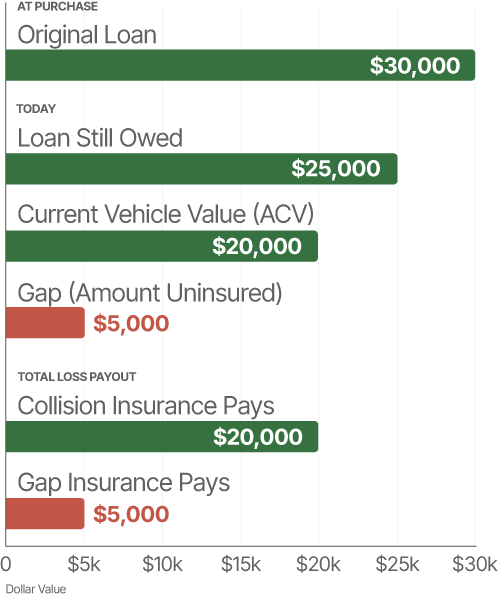
You might want to consider gap insurance if you have a financed vehicle and still owe more on the loan or lease than your car is worth in the event of a total loss. Consider the following example:
- Your vehicle's loan was for $30,000 at the time of purchase.
- Though your vehicle's value is now $20,000, you still owe $25,000 on your auto loan.
- This leaves a $5,000 gap in the event of a total loss.
- Your collision insurance would pay your vehicle's ACV of $20,000, and if you have gap insurance, it would pay the remaining $5,000 difference to cover the remainder of your loan.
Gap insurance is often required when you sign a vehicle lease. For other financed vehicles, gap insurance is usually optional. An independent insurance agent can help you determine if gap insurance makes sense for you.
How to Save on Collision Insurance in 2026
There are a few easy ways you can save on collision insurance. Just try any of these easy tips:
- Raise your deductible: Increasing your policy's deductible leads to lower monthly premiums, but you'll have to pay more out of your own pocket in the event of a claim.
- Bundle your home and auto insurance: Many carriers allow you to bundle your home insurance and auto insurance to receive a discount on each coverage.
- Ask about safe-driver and telematics discounts: Your carrier may offer car insurance discounts for having a clean driving record or for signing up for a telematics program that tracks your behavior on the road.
- Drop collision insurance for low-value vehicles: If your vehicle is paid off and has a lower value, such as under $7,500 or $3,000, consider dropping your collision coverage altogether.
- Compare carriers with an independent insurance agent annually: It's recommended to compare policies from multiple carriers before your policy renews each year to ensure you're still getting the best rate.
Your independent insurance agent can compare quotes from several carriers near you to find the most affordable collision insurance in 2026.
FAQs About Collision Insurance
How much does collision insurance cost on average?
Collision insurance costs an average of $464 per year, or about $38.58 per month. Newer vehicles and poor driving records can lead to higher costs, however.
What's the difference between collision and comprehensive insurance?
Collision insurance pays for damage from an impact, such as with a vehicle, object, or pothole. Comprehensive pays for non-impact events, such as theft, weather, vandalism, and animal strikes.
Is collision insurance required by law?
No. While no states require collision insurance by law, lenders and lessors typically require it until your auto loan is paid off or your lease term ends. Still, about 77% of drivers in the U.S. carry collision insurance by choice.
What collision insurance deductible should I choose?
Most drivers select $500 because it balances premium savings with a manageable out-of-pocket cost in the event of a collision. Raising your deductible from $500 to $1,000 can cut your premiums by up to 20%.
Should I drop collision insurance on an older car?
It depends. Apply the 10% to determine if you should keep collision coverage. If your annual collision and comprehensive premium exceeds 10% of your car's actual cash value, dropping collision is usually recommended.
Does collision insurance cover hitting a deer?
No. Animal strikes, or collisions with large animals, are covered under comprehensive insurance, even though they involve your moving vehicle. Collision insurance covers impact with cars or stationary objects.
Will filing a collision claim raise my premium?
Yes. An at-fault collision claim typically raises premiums by 12%-45% at your next policy renewal. However, carrier rules and state laws vary.
Do I need both collision and gap insurance on a leased car?
Often, yes. Lessors usually require collision insurance and many also require gap insurance, since collision pays only your vehicle's ACV, which factors in depreciation, and gap insurance covers the difference between the ACV and your remaining lease balance in the event of a total loss.
Why Work with an Independent Insurance Agent for Collision Coverage?
Independent insurance agents have access to multiple car insurance companies, so they're free to shop and compare policies and rates for you. Ultimately, they can get you matched to the policy that offers the best blend of coverage and cost. And down the road, your agent will still be there to help file car insurance claims for you or update your coverage as necessary.
Sources
https://www.iii.org/article/auto-insurance-basics-understanding-your-coverage
https://wallethub.com/edu/ci/collision-insurance/7292
https://www.nerdwallet.com/article/insurance/collision-insurance
https://www.moneygeek.com/insurance/auto/coverage/collision/
https://www.iii.org/article/what-is-covered-by-collision-and-comprehensive-auto-insurance