

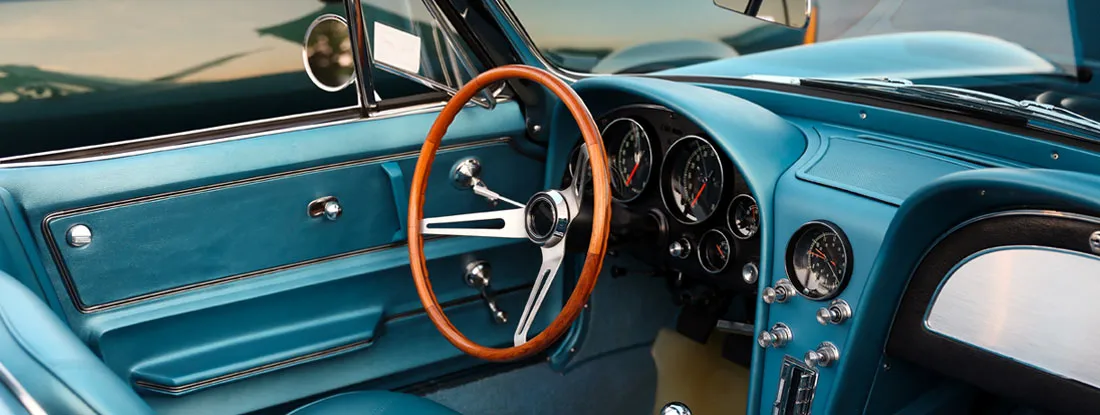
You’ve spent a lot of time and money on your classic, antique, or vintage car. With all of that time and money invested in your classic car, you’ll want to buy the appropriate insurance. Since standard cars lose value over time and classic cars often gain value, you’ll want a specialty car insurance policy to protect your cherished vehicle.
Many insurance companies offer classic car insurance, but some are better than others. An independent insurance agent can help you find the right classic car insurance policy. But first, here's more about classic car insurance.
Key Takeaways - Classic Car Insurance in 2026
Classic car insurance is usually offered for vehicles that are at least 20 years old.
Classic car insurance costs an average of $200 to $900 per year, or about $17 to $75 per month.
You can earn discounts on classic car insurance for insuring multiple vehicles or having a clean driving record.
Some insurers require you to store your classic car in a secure garage while not in use.
Working with a local independent insurance agent is strongly recommended, as they can shop and compare classic car insurance quotes and policies for you to find the best deal.
What Is Classic Car Insurance?
Classic car insurance is a specialized type of auto insurance that covers a variety of classic and antique cars. Classic car insurance is similar to regular car insurance, but there are key differences that reflect the unique nature of classic cars.
The main difference between classic car insurance and traditional car insurance is how the car is valued. Standard auto insurance policies pay actual cash value, or ACV, on claims.
Actual cash value takes depreciation into account on the value of the car. And since cars lose their value fairly quickly, this can result in a much lower claims check payout than what you paid for your vehicle if your car is declared a total loss.
Classic car insurance, on the other hand, covers your classic car's full appraised value in the event of a claim. This coverage differs from ACV in that it doesn't account for depreciation. Your independent insurance agent can further explain how classic auto insurance works.
What Is Collector Car Insurance?
Collector vehicle insurance is similar to traditional car insurance in that it's designed to protect you in the event of an accident. However, traditional car insurance assumes an appraised value based on comparable models and current replacement costs. But with collector car insurance, you and your insurer agree on the car's value with the help of an appraiser. Your policy could be worth $10,000, $100,000, or even more, depending on what your appraiser decides your car is worth.
Some carriers offer inflation guard. American Collectors, for example, offers inflation protection that increases your car's appraised value by a maximum of 6%. Most carriers, however, offer a maximum of 4%.
What Is Antique Car Insurance?
Antique car insurance is a special type of insurance policy designed to protect cars that fall under the definition of "antique", which begins where classic cars leave off, at around 45 years of age or older. It all depends on the type of vehicle you own. On the surface, an antique or vintage car insurance policy works the same way as a traditional auto policy.
If something happens to the vehicle, the insurer will reimburse you with a payout based on a certain value. The value, in this case, is determined in the same way as a classic car insurance policy, as an agreed-upon value that appreciates based on the market, rather than depreciating, like a traditional auto insurance policy.
What's the Difference Between Antique and Classic Car Insurance?
Nothing. Classic and antique car insurance both fall under collector car insurance and are still valued and covered in the same manner. Their difference is only whether it's considered a classic, an antique, or a vintage. Each name is used interchangeably.
What Qualifies as a Classic Car for Insurance in 2026?
There are essentially two definitions of classic cars: the strict definition used by classic car insurance companies and the category more loosely and commonly used by the public, which often just refers to any older vehicle. Both definitions describe vehicles that are at least 20 to 25 years old.
However, there are subcategories of terms used to describe different types of vehicles between 20 and 100 years old. So, when does a car become a classic for insurance purposes? For our purposes, the term "classic car" describes any older vehicle, including true classic cars, antique cars, hot rods, modern collector cars, collectible cars, or any others that fall under the classic car, motorcycle, or truck umbrella.
"Youngtimer" classic vehicles, made between the 1980s and the early 2000s, are now also commonly accepted by a few carriers, including Hagerty and Leland-West. An independent insurance agent can help you find youngtimer insurance if you drive a younger classic vehicle.

Classic Car Insurance vs. Regular Car Insurance
Classic car insurance typically costs 30%-40% less than regular full coverage auto insurance. However, since there's no standard definition of what a classic car is other than using a vehicle's age to classify it, each insurer may classify your vehicle differently. Normally, this won’t affect your coverage, but each classic car insurance company handles these vehicles in its own way.
There are many different categories that your classic car may fall into to qualify for classic car insurance instead of traditional auto insurance coverage.
Categories of classic vehicles for insurance
| Type of Car | Definition |
|---|---|
| Classic cars | Typically, classic cars are vehicles between 20 and 40 years old. Some states and insurance companies, however, extend that timeframe even longer. |
| Antique cars | Slightly older than classic cars, antique cars typically begin at 45 years of age or older. |
| Vintage cars | Vintage cars are generally considered to be vehicles built before 1925, in the earliest days of the automobile. Other definitions may have a narrower window of cars built between 1919 and 1930. |
| Kit and replicas | Kits and replicas are vehicles you can build yourself or buy that appear similar to famous classic cars. They are valuable in their own right and have their own classification. |
| Muscle cars and hot rods | Hot rods and muscle cars are typically modified with extra parts built for performance, or even comfort, in the case of street rods. |
| Modern collector cars | Often created as special edition cars, they have unique features that set them apart from regular cars. They're typically built after 1990 but still fall within the ‘classic car’ realm of insurance. |
| Exotics and sports cars | If your collector car is especially built for speed, it may fall under this category. Some of these vehicles are involved in racing, which often excludes coverage while on the track. |
These categories aren’t set in stone and vary with each state and insurance company. They mainly serve to help organize the different types of vehicles rather than just having one broad classic car category.
Most classic car insurance companies won’t have a problem insuring most of these vehicles. But standard insurance companies may only be willing to insure vehicles built after 1930 or 1940, which means you’d need to find a specialty company that can insure any of these older vehicle types. Most standard auto insurance companies won't insure vehicles manufactured before 1980.
How Much Does Classic Car Insurance Cost in 2026?
The average classic car insurance premium per year ranges from about $200 to $900 per year, depending on the carrier, type of vehicle, etc. So, how much does classic car insurance cost per month? It ranges from about $17 to $75 per month. There are several factors that can influence the cost of classic car insurance, including:
- Vehicle value
- Annual mileage tier
- How the vehicle is stored
- Your driving record
- Prior claims
- Amount of coverage
The cost of your policy will also depend on whether you buy full coverage auto insurance or if you get liability coverage only. An independent insurance agent can help you get set up with the right coverage for your classic car.
Average Classic Car Insurance Rates by Carrier in 2026
When you're looking for the cheapest classic car insurance in 2026, it's helpful to know which carriers offer it. The table below compares the top carriers for the cheapest classic car insurance rates this year for two specific vehicles: a 1966 Ford Mustang valued at $15,000 and a 1969 Chevy Camaro valued at $23,000.
| Cheapest Collector Car Insurance Company | 1966 Ford Mustang | 1969 Chevy Camaro |
|---|---|---|
| American Collectors | $201 | $244 |
| American Modern | $190 | $278 |
| Grundy | $284 | $305 |
| Hagerty | $284 | $376 |
| Leland-West | $152 | $198 |
| Liberty Mutual (Safeco) | $707 | $863 |
Who Sells Classic Car Insurance?
Classic car insurance is sold by various insurance companies that sell standard car insurance. Some of these companies are among the largest car insurers in the country, such as Progressive and Liberty Mutual (formerly through its Safeco brand, which has been discontinued as of 2026). But not every standard car insurance company will underwrite classic car insurance.
Standard car insurance companies that can insure your classic car may still not be the best option for you to get your policy from. They may offer agreed value on your car, but probably won't come with any of the extra perks and coverage options that specialty classic car insurers have. An independent insurance agent can help advise you on which classic car insurance company will best meet your needs.
| Traditional Car Insurance Companies | Overall Carrier Star Rating |
|---|---|
| Liberty Mutual (formerly Safeco division) |

|
| Progressive |
|
There are other insurance companies that specialize in and only sell classic car insurance. These companies can insure your 1970 Corvette, but won’t insure your 2015 Tahoe.
They offer specialized insurance coverage for classic cars. Often, these companies focus on excellent claims and customer service to help set them apart from the larger companies, which may be able to offer better rates.
| Specialty Car Insurance Companies | Overall Carrier Star Rating |
|---|---|
| Grundy |

|
| Condon Skelly |
 |
| Heacock |
|
| J.C. Taylor |

|
| American Collectors |

|
| American Modern |
|
| Hagerty |
|
The Best Classic Car Insurance Companies for 2026
There are many excellent classic car insurance companies, including both specialty insurers and traditional insurers, that also offer standard auto insurance. It's always worth comparing options and speaking with an independent insurance agent to find the best classic car insurance option for you.
- Best overall classic car insurance company: American Modern
American Modern has a little bit of everything. It can insure nearly any type of classic vehicle, is available in all 50 states, and also comes with a wide range of discounts that could save you nearly 50% on your premiums.
It also offers a host of perks and even an unlimited mileage driving plan. American Modern's availability, coverage options, and perks make it a top choice for classic car insurance.
- Best for classic car culture: Hagerty
Hagerty values classic car culture so much that it created its own special club for classic car enthusiasts called the Hagerty Drivers Club. This classic car club has special member events and discounts on supplies for your classic car. They even include free towing up to 150 miles, along with $100 in roadside assistance services.
- Best for claims: Hagerty
In addition to its classic car culture, Hagerty enjoys a very good reputation for its claims service. Its online reviews are especially positive, with thousands of reviews giving the classic car insurer a very favorable rating on its claims service.
- Best for valuing classic cars: Heacock
Heacock is a smaller classic car insurance company, but it offers coverage in all 50 states. It has fairly strict requirements for its drivers, but the company will work with you to determine your classic car's value without requiring an appraisal. The company will perform its own personalized valuation of your car through a virtual inspection and a discussion with you.
- Best for insuring classic cars with rising value: Grundy
Grundy is another classic car specialty insurance company that excels in many areas. It especially does well with vehicles whose value may increase over time.
Grundy offers inflation protection for your vehicle, though it is an extra coverage option that costs more. But it can protect your car's value for up to 150% of its original agreed value.
- Best for driving your classic car daily: Liberty Mutual (formerly the Safeco division)
Most classic car insurers put a cap on the number of miles you can drive in any one year. In addition, they typically don’t want you driving your car around every day. Liberty Mutual is an exception to this rule with its "regular-use" option.
By choosing this option, you’ll be allowed to drive your classic car daily and for up to 10,000 miles annually. But it does cost more, so drivers looking at Liberty Mutual who don’t need this coverage can opt for the "limited-use" option that allows up to 5,000 miles annually.
- Best for insuring multiple cars: Leland-West
If you own multiple vehicles, Leland-West is the best choice for specialty car insurance. The carrier offers the cheapest rates for insuring multiple classic cars, and up to $50,000 in coverage for classic cars you currently own and insure, and any other eligible vehicles you buy.
Leland-West offers exotic car insurance for popular vehicles such as Porsches and Ferraris, and luxury auto insurance for popular vehicles such as Rolls-Royces and Aston Martins. You can also get classic truck insurance from Leland-West. The carrier's comprehensive coverage is a great choice for collector vehicles as well.
How Do I Qualify for Classic Car Insurance?
Qualifying for classic car insurance isn’t quite as simple as just owning a classic vehicle. Most classic car insurance programs have fairly strict requirements for drivers on the policy.
However, if you don’t meet any of these specific requirements, such as the classic car mileage limits, you may still be able to buy a classic car insurance policy through a large national insurer that also does classic cars, such as Progressive. Most traditional and specialty insurance companies have some combination of the following classic car insurance requirements:
| Common Driver Requirements | Explanation |
|---|---|
| Minimum Age | Most insurers require drivers to be over the age of 25. |
| Safe Driving Record | Most insurers want to see no more than 1 accident or violation in the last 3 to 5 years. |
| Driving Experience | Most insurers want to see experience driving classic cars. |
| Primary Auto Insurance | You must have a separate primary auto policy for regular-use vehicles, often with higher liability limits. |
| Vehicle Safeguards | Vehicles should be secured with anti-theft and safety measures to reduce risk of damage or theft. |
| Vehicle Maintenance | Cars in active restoration are often excluded; insurers prefer well-maintained, road-ready vehicles. |
| Annual Mileage Limits | Coverage may include mileage caps such as 1,000, 2,500, 5,000, or 7,500 miles per year depending on classification. |
| Vehicle Storage | Most insurers require classic vehicles to be stored in a secure, enclosed garage. |
| Youngtimer Exceptions | Vehicles from the 1980s–early 2000s may qualify under different rules or restrictions depending on the insurer. |
An independent insurance agent can help you determine if you qualify for classic car insurance. They can also help you find classic car insurance with no garage requirements.
What Should I Look for with Classic Car Insurance?
There are a few things you’ll probably want to prioritize when looking for a classic car insurance policy. While most classic car insurers are similar, they do have some differences. You might not necessarily want to look for the cheapest insurance on your classic car.
With classic car insurance, it’s important for the policyholder to know, understand, and verify the coverage they have and what’s not covered under the policy. That's because you wouldn't want to get into an accident and later find out you don’t have collision coverage on your valuable car. Be sure to review your policy's exclusions with the help of an independent insurance agent.
Check for these coverages in your classic car insurance policy:
- Agreed value: Agreed value means that you and your insurance company will agree on the car’s value, usually through an appraisal. This value dictates a dollar amount limit of how much your insurance company will pay for your car if it's declared a covered total loss, and it won’t depreciate over time.
- Miles allowed: Classic car insurance programs vary considerably in the number of miles they allow you to drive your car. Most classic car insurers will have a limit of between 1,000 and 6,000 miles per year.
- Event coverage: Your classic car insurer might not cover you if you drive your car to special auto events or exhibitions. If they don’t, you may need to buy a separate commercial auto policy just for that event, or you could switch to a company that does cover classic car exhibition events.
- Specialty towing: Many classic car insurance programs include flatbed towing for your vehicle, which helps protect it from further damage.
- Specialty repair shops: Classic cars often need specialized parts and labor, which are usually more expensive than those found in regular auto repair shops.
- Spare parts coverage: Many carriers offer coverage for spare parts. For example, American Collectors offers up to $500, Hagerty offers up to $750, and both Leland-West and American Modern offer up to $2,000.
- Restoration coverage: Many classic car insurance companies offer coverage for the cost of restoring your collector, luxury, or antique vehicle. Coverage limits vary by company.
- Inflation guard: Some carriers offer inflation guard coverage between 4% and 6% of your vehicle's value.
Working together with an independent insurance agent is a great way to ensure you get set up with a classic car insurance policy that includes everything you need.
Classic Car Insurance Discounts and Ways to Save in 2026
So, is classic car insurance cheaper than regular car insurance? The standard for classic car insurance vs. regular is that it typically costs about 30% less than regular car insurance.
However, many variables may affect that number, possibly making it more expensive than standard car insurance. Just having an agreed-value insurance policy is always more expensive than an actual cash-value policy, regardless of the type of insurance policy.
But the exact price of classic car insurance can depend on many of the same factors that determine a standard car insurance policy's rate, such as:
| Your vehicle's value |
| Insuring a classic car worth $30,000 is obviously going to be much less expensive than insuring one worth $150,000. The values of classic cars can vary considerably, which could make your high-value classic car more expensive to insure than your standard car. |
| Driving history |
| Most classic car insurers have strict driver eligibility requirements anyway, but having a clean driving record will help keep your premiums down. |
| Location |
| Classic car insurance companies use location as a rating factor, so your premium in parts of California or New York may be more expensive than the same policy would cost for drivers in Ohio. |
| Vehicle safety |
| While some insurers may require you to secure your vehicle in a locked garage, others will simply give a discount if you take extra steps to protect your vehicle. |
| Classic car insurance discounts |
| You can ask your independent insurance agent or carrier about any classic car insurance discounts you may qualify for to bring your premium rates down, such as multi-vehicle discounts if you insure multiple cars, multi-policy discounts if you bundle your coverage, anti-theft discounts if your car has a burglar alarm or other safety features, driver safety discounts if you complete an approved accident-prevention course, garage security discounts if you store your vehicle in a garage, and high-value collection discounts if your car is valued at more than $150,000. |
However, there are a few factors that typically make classic car insurance less expensive than regular car insurance, even with the agreed value taken into account:
| Fewer miles driven |
| Even though nearly all classic car insurance programs have miles-driven requirements, it’s also normal that classic car owners don’t drive their vehicles as much. Fewer miles driven means there’s less of a chance that an accident will happen. |
| Special care provided |
| Insurance companies are more willing to insure classic cars on an agreed value basis, partly because they know that classic car owners are more likely to keep their vehicles in outstanding shape and take extra measures to protect them. |
| Fewer accidents |
| Standard car insurance rates are partly determined by the number of accidents that happen in a given area. With classic car insurance, those accident numbers don’t apply since it’s a specialty market, and classic cars simply don’t get into as many accidents as regular cars. |
Most classic car insurers don’t offer the standard car insurance discounts that you’ll find with regular car insurance, though each company may offer one or two discounts. The larger insurance companies are more likely to offer discounts, such as a multi-policy or multi-vehicle discount, than smaller specialty companies.
Regardless, an independent insurance agent can easily help you find the cheapest classic car insurance near you. They can also recommend additional tips for how to save on classic car insurance.
Agreed Value vs. Stated Value vs. Actual Cash Value
The table below compares the differences between agreed value insurance, stated value insurance, and actual cash value (ACV) insurance.
| Agreed Value | Stated Value | Actual Cash Value (ACV) |
|---|---|---|
| You and the insurer agree on your vehicle’s value | You state the vehicle’s value after an appraisal | Uses the depreciated market value of the vehicle |
| Depreciation not factored in | The insurer pays the lesser of the stated value or ACV | The standard auto insurance default valuation model |
| Used by all major specialty carriers |
Expert Tips on Classic Car Insurance
When comparing classic car insurance programs, consider these major issues:
- How often will you use the auto?
- How do you store the auto?
- How much will the company put on your car?
- Will you be restoring it?
The price of your insurance will hinge on the answers to these questions. For example, let’s say you’re insuring a fully restored 1966 Jaguar. An insurance company will likely insure your vehicle if you can guarantee that one of these criteria is true:
- You won’t drive it more than 60 days a year
- You will restrict your use to parades and car shows
- You can guarantee that it will be stored in a locked garage
It's also helpful to know that the maximum value, or stated amount, is the maximum amount that the insurance company will pay on your vehicle.
FAQs About Classic Car Insurance
Are classic cars cheaper to insure?
Generally, yes, classic cars are cheaper to insure than newer standard cars by about 30%-40% on average. However, there are many variables that may make your classic car more expensive to insure. Coverage for older standard vehicles that only carry liability coverage is likely to be less expensive than coverage for classic cars.
Why are classic cars cheaper to insure?
Classic cars are usually cheaper to insure than regular cars because they get into fewer accidents, so there are fewer claims payments made on classic cars. Regular car insurance rates are, in large part, determined by the cost of claims payments. Insurance companies have to take in enough money to pay claims fully. With fewer claims, rates can be lower.
How much does classic car insurance cost per month in 2026?
Classic car insurance ranges from about $17-$75 per month, or about $200-$900 per year, depending on the insurance company, your vehicle's value, and other factors.
What if I have a classic car but don’t qualify for a classic car insurance program?
If you can’t buy classic car insurance but have a classic car, you’ll probably need to put your vehicle on your regular car insurance policy. At the very least, you’ll still need liability coverage when you’re driving it, which a regular car insurance policy will provide. But keep in mind that you’ll probably have actual cash value (ACV) coverage, which means you won’t get the full value of your car if you have a claim.
What cars are eligible for classic car insurance?
Each classic car insurance company has slightly different vehicle requirements. Some will insure almost any type of car that could be considered a collector vehicle, whether it’s new or old. Other insurers will want the car to be at least 20 or 25 years old to qualify for a classic car insurance program.
Do I need insurance for a classic car?
Yes, you need some type of car insurance for a classic car. Any vehicle that’s driven on the road or registered with the state needs insurance to be legal.
Nearly every state requires at least liability coverage on these vehicles, including classic cars. If you want to insure your classic car for its full value and like the extra perks and coverage options of a classic car insurance program, then you can go through a classic car specialty insurance company.
How old does a car need to be for classic car insurance?
The standard definition of a classic car is any car that’s over 20 to 25 years old. However, there are modern collector cars that are less than 20 years old that could be insured under a classic car insurance program.
What does "agreed value" mean?
First, it's important to understand how a "traditional" car insurance policy is valued. The second you drive your car off the lot, its value begins to depreciate, meaning the cost of repairs and replacement will decrease. Because of that, traditional auto insurance policies provide protection based on an "actual cash value" or "stated value," which can leave you with a smaller payout than you originally anticipated.
On the other hand, with an antique or classic car insurance policy, the insured and the insurer come to a mutually accepted value called an "agreed" or “guaranteed” value. Here, the vehicle owner will submit the value to the insured, and their underwriters and appraisers will examine the details and decide upon the validity of the value.
Determining the actual value of an antique car can be tricky. Obviously, owners are biased sources who can inflate the perceived value beyond its natural worth, so determining the fair market value can be a back-and-forth process.
In the end, agreed value is a better form of valuation for both the car collector and the insurer, and finding the right insurer who understands this is important.
Can I drive my classic car daily?
Typically, no. Most carriers prohibit daily commuting with your classic car. However, Hagerty allows the hobby use of your classic vehicle without a fixed annual mileage limit. Liberty Mutual also offers a regular-use option with up to 10,000 miles driven per year. An independent insurance agent can help you find classic car insurance for a daily driver vehicle.
Does classic car insurance cover restoration projects?
In some policies, yes. Hagerty's Vehicle Under Construction coverage offers up to 10% for quarterly value increases and tool coverage. American Modern and Heacock also offer coverage for project cars in need of restoration.
An Independent Insurance Agent Can Help You Get Classic and Collector Car Insurance
Many classic car insurance companies have a good reputation for customer service, or at least a better one than most standard auto insurance companies. But the choices can still be overwhelming when you’re trying to compare different classic car insurers’ programs and rates. However, an independent insurance agent can provide you with several classic car insurance, muscle car insurance, or exotic car insurance quotes from leading carriers.
Independent insurance agents browse classic car insurance reviews and shop policy options from top-rated companies in your area. They'll help make sure you walk away with the best classic car insurance policy for you.
They can help you find the best classic car insurance for high-value vehicles, classic car insurance for restoration project vehicles, and classic car insurance with no garage requirement. Get started with an independent insurance agent today.
Sources
https://www.iii.org/article/insuring-your-classic-car
https://www.claimsjournal.com/news/national/2016/08/03/272543.htm
https://www.compare.com/auto-insurance/resources/coverage/classic-car-insurance
https://americancollectors.com/insurance/
https://www.moneygeek.com/insurance/auto/best-classic-and-collector-car-insurance/