

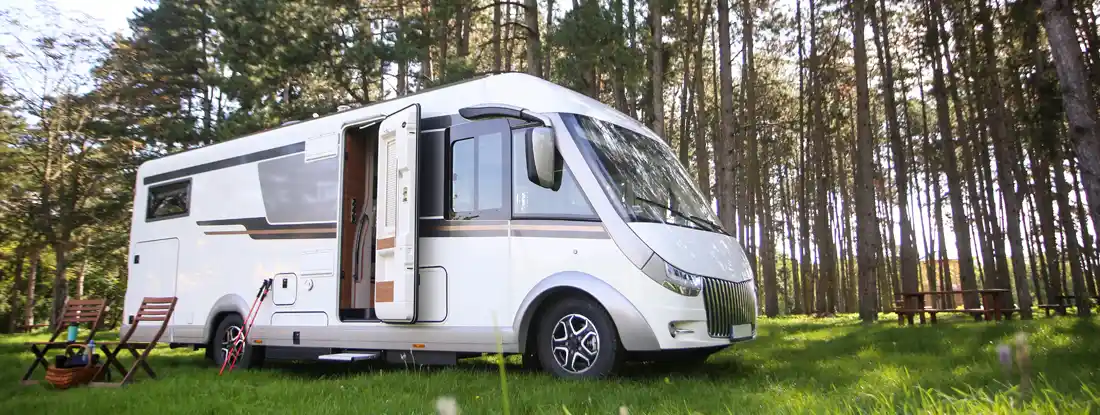

RV insurance covers liability, collision, and comprehensive claims. Many policies also include optional residential coverages, such as vacation liability and personal effects. However, it's important to understand that what is covered by RV insurance varies for motorhomes compared to travel trailers.
Fortunately, a local independent insurance agent can help you get set up with the right RV insurance coverage. They know exactly where to find the best blend of coverage and cost from a top-rated local carrier. But if you've been asking, "What does RV insurance cover?" start with our guide to find out what's included in a policy.
Key Takeaways - What Does RV Insurance Cover? 2026 Guide
RV insurance covers liability, collision, comprehensive, uninsured motorist, and medical payments, depending on the types of coverage you select for your specific policy.
Most states require RV liability insurance by law, and certain states require uninsured motorist coverage.
If you have a travel trailer, you'll likely need separate coverage beyond what's included in your RV policy.
Working with a local independent insurance agent is strongly recommended, as they can shop and compare RV insurance quotes to find the best rate and fit for your unique motorhome.
What RV Insurance Typically Includes
Most RV insurance policies combine required and optional coverages. Liability insurance is required in nearly every state for motorhomes. The optional RV insurance coverage types include collision insurance, comprehensive insurance, uninsured motorist insurance, and medical payments.
Standard RV insurance coverage often includes liability coverage and several types of optional coverage, such as collision and comprehensive. There are also RV policy components that can be added, including vacation liability, personal effects, extra expense, and full replacement cost coverage.
| Required Coverage | Optional Coverage |
|---|---|
| Liability Coverage (in most states) | Collision |
| Uninsured motorist (in certain states) | Comprehensive |
| Uninsured motorist (in certain states) | |
| Medical payments | |
| Vacation liability | |
| Personal effects | |
| Emergency expense | |
| Full replacement cost |
Core Coverages in a Standard RV Policy
There are a few core RV insurance coverages that form the base of any RV insurance policy. The coverage types outlined below comprise standard RV policy coverage.
Liability coverage
RV liability coverage is required by law for motorhomes in nearly every state. There are two main components that it covers: bodily injury liability and property damage liability. This means that motorhome liability insurance covers the cost of bodily injuries and personal property damage caused to third parties by or on your RV.
RV insurance liability requirements vary by state. Your policy's coverage limits must meet the mandated minimums set by your state. However, you may want to buy higher coverage limits if you have a large RV. Also, if you have a travel trailer, understand that its liability coverage comes from the towing vehicle's policy, not the trailer policy.
Collision coverage
RV collision coverage pays to repair or replace your RV after a collision with another vehicle or object, regardless of fault. A deductible applies to motorhome collision insurance claims. This coverage is optional by law, but often required by most lenders if you finance your RV.
The amount of reimbursement you can receive if your RV is totaled due to a covered loss depends on whether you have actual cash value (ACV) coverage or full replacement cost coverage. ACV policies will only pay the depreciated market value of your RV at the time of the loss, while full replacement cost policies don't factor in depreciation. A newer or high-value motorhome can benefit from a full replacement cost RV insurance policy.
It's also important to understand the difference between RV collision vs. comprehensive coverage. While collision insurance covers accidents with other vehicles and objects, comprehensive insurance covers threats other than collision. Many RV owners choose to add both types of coverage to their policies.
Comprehensive coverage
RV comprehensive coverage covers the cost of repairs due to non-collision damage, such as theft, vandalism, fire, hail, falling objects, flooding, and animal strikes. Motorhome comprehensive insurance is optional by law, but also typically required by most lenders if you finance your RV.
When asking, "What does RV comprehensive cover?" it's important to understand that coverage does not apply to mechanical breakdowns. You'll need separate mechanical breakdown assistance coverage for that type of threat.
Uninsured and underinsured motorist coverage
RV uninsured motorist coverage protects you if you're hit by a driver with no insurance or insufficient coverage of their own to properly compensate you. Uninsured motorist RV insurance is required in some states, but optional in others. Considering that about 15.4% of drivers in the U.S. are uninsured in 2026, it can be worth considering a UM/UIM RV policy. Learn more about what RV insurance costs.
Medical payments coverage
RV medical payments coverage pays for medical expenses for you and your passengers after an accident, regardless of fault. Motorhome medical insurance typically comes with low coverage limits, often ranging from $1,000 to $5,000 in standard policies.
Personal injury protection (PIP) coverage provides broader protection and covers lost wages in addition to medical bills. In no-fault states, RV PIP coverage may be required instead of medical payments. An independent insurance agent can help you determine if PIP coverage is required or if medical payments would be a better fit for you.
Optional Coverages You Can Add to Your RV Policy
There are several RV insurance optional coverages you can choose from when building your policy. These coverages address risks specific to using an RV as a living space and travel vehicle. RV insurance endorsements are not included in your policy by default and must be specifically added to your coverage. Common RV insurance add-ons include vacation liability and personal effects coverage.
Vacation liability coverage
Vacation liability RV insurance covers third-party bodily injuries and personal property damage in or around your RV while it's parked as a temporary vacation residence. Standard liability only covers driving incidents. Also called RV campsite liability, coverage is typically available at a minimum of $10,000, but this limit can be increased to $500,000.
Vacation liability coverage is designed for part-timers. People who live in their RVs as their permanent residence need full-timer's liability coverage. An independent insurance agent can help you get the right RV park liability coverage.
Personal effects and attachments coverage
RV personal effects coverage protects your personal belongings kept inside your motorhome, including clothing, electronics, camping gear, and more. RV contents insurance also covers attached accessories, including awnings, satellite dishes, and bike racks, that are not covered by standard car insurance policies. Sublimits may apply for high-value items under RV attachments coverage.
Emergency expense coverage
RV emergency expense coverage pays for hotel rooms, takeout meals, and transportation costs if your RV becomes disabled a certain distance from your home, typically 100 miles or more. RV breakdown living expenses coverage is comparable to loss of use coverage under homeowners insurance. Certain carriers, such as Progressive, offer up to $7,500 in motorhome stranded coverage for full-timers and $750 for part-timers.
Roadside assistance coverage
RV roadside assistance coverage pays for the cost of professional towing, tire changes, battery jumps, fuel delivery, and lockout services. Since RV towing is expensive, standard auto insurance coverage often falls short for large motorhomes, making RV breakdown coverage essential. A motorhome towing insurance plan accounts for an RV's size and weight.
Full replacement cost coverage
RV full replacement cost coverage pays to replace your totaled RV with a new one of a similar model and quality instead of paying a depreciated ACV amount. Considering that Class A motorhomes can depreciate by 20% to 30% after one year of ownership alone, motorhome total loss replacement coverage is preferred for many owners.
However, replacement cost coverage is typically only available for newer RVs within three to five model years. An independent insurance agent can further explain the difference between RV ACV vs. replacement cost coverage and help you choose the best option for your motorhome.
Loan or lease gap coverage
RV gap coverage pays the difference in the amount that's still owed on an RV loan or lease and the RV's current market value at the time of a total loss. Since RVs depreciate quickly and loans often last for many years, RV loan gap insurance can be critical for avoiding hefty losses. Motorhome gap insurance prevents you from having to pay off a loan on a vehicle you no longer have.
What RV Insurance Does Not Cover
There are several common RV insurance exclusions to be aware of, including:
- Mechanical or electrical breakdown (without separate coverage)
- Normal wear and tear
- Routine maintenance
- Mold and pest damage
- Flood damage from rising water
- Intentional damage
- Business use
- Mexico coverage (without a separate Mexican RV insurance policy)
- Contents valued above policy sublimits
If you're still asking, "What does RV insurance not cover?", your independent insurance agent can help you review your specific RV policy exclusions.
How Coverage Differs for Motorhomes vs. Travel Trailers
If you have a trailer, it's important to understand the difference between motorhome vs. travel trailer insurance. Since motorhomes are self-propelled, they require their own liability coverage. Travel trailers are towed, and their liability coverage while being towed comes from the towing vehicle's auto policy, not the trailer policy.
Trailer policies focus on physical damage and optional residential coverages for the trailer while it's parked. That's why it's important to be certain that your towing vehicle's auto policy includes towable RV insurance for your trailer. An independent insurance agent can further explain RV vs. travel trailer coverage differences. Learn more in our RV coverage FAQs below.
| Motorhome Insurance | Travel Trailer Insurance |
|---|---|
| Includes liability coverage for the RV, not the trailer | Covers physical damage and optional residential coverages while your trailer is parked |
| Covers third-party property damage and bodily injuries while driving your RV | Requires additional liability coverage from the towing vehicle's policy while your trailer is being towed |
FAQs About What RV Insurance Covers
Does RV insurance cover water damage?
Yes, if the water damage is caused by a covered peril (e.g., rainstorm, burst pipe, or hail damage to the roof). RV water damage claims aren't covered if the cause is due to gradual leaks, poor maintenance, or flooding from rising water. Comprehensive coverage handles most storm-related water damage.
If you're still wondering, "Does RV insurance cover water damage?" an independent insurance agent can help you understand the specifics of your policy, including RV insurance roof leak coverage.
Does RV insurance cover theft?
Yes. RV comprehensive theft coverage pays to repair or replace the RV if it's stolen. Personal effects coverage extends protection to belongings inside. However, in the event of an RV stolen insurance claim, without personal effects coverage under your policy, only the vehicle itself is covered. If you're still wondering, "How does RV insurance cover theft?" your independent insurance agent can help you understand your policy.
Does RV insurance cover an awning or slide-out?
Permanently attached accessories are typically covered under comprehensive or collision as part of the RV structure. Accessories added after purchase may need a personal effects or attached accessories endorsement, also known as RV slide-out insurance or RV attached accessories coverage. So, to answer, "Does RV insurance cover awning damage?" you'll need to confirm which accessories are covered with your insurer.
Does RV insurance cover damage while in storage?
Yes, in most cases, RV insurance applies while in storage. Comprehensive coverage applies whether the RV is on the road or in storage. RV storage comprehensive coverage also protects against theft, fire, hail, and vandalism while in a storage facility.
Some insurers offer reduced-premium storage policies that maintain comprehensive coverage while dropping driving-only coverages. If you're still wondering, "How does RV insurance cover storage damage?", your independent insurance agent can help review your policy with you.
Does RV insurance cover me in Canada?
Yes. If you've been asking, "Does RV insurance cover Canada use?" most U.S. RV policies extend coverage into Canada, and your insurer may issue a non-resident insurance card. However, Mexico is a different story. RV coverage typically stops at the U.S. border.
To have RV insurance in Mexico, a separate Mexican RV insurance policy is required for travel south of the border. You can also ask your carrier about RV insurance international coverage.
Is collision and comprehensive coverage required for an RV?
No, neither type of coverage is required by state law. If you've been asking, "Is RV comprehensive and collision required in my policy?" liability coverage is the only legal requirement for motorhomes. However, if the RV is financed or leased, lenders almost always require both collision and comprehensive until the loan is paid off.
RV insurance requirements for collision and comprehensive coverage typically only extend from lenders. However, if you're still wondering, "Do I need full coverage RV insurance?" your independent insurance agent can help.
An Independent Insurance Agent Can Help You Find RV Insurance
When you're ready to find the right RV insurance coverage, no one's better equipped to help than a local independent insurance agent. These agents have access to multiple carriers in your area, so they're free to shop and compare specialized RV insurance and travel trailer insurance quotes and policies for you to find the best deal. And down the road, your independent insurance agent can help you file RV insurance claims and update your coverage when necessary.
Sources
https://www.progressive.com/answers/rv-101/
https://www.nerdwallet.com/insurance/auto/learn/rv-insurance
https://insurify.com/specialty-vehicles/rv/
https://maxdispatchservice.com/us-drivers-uninsured/