

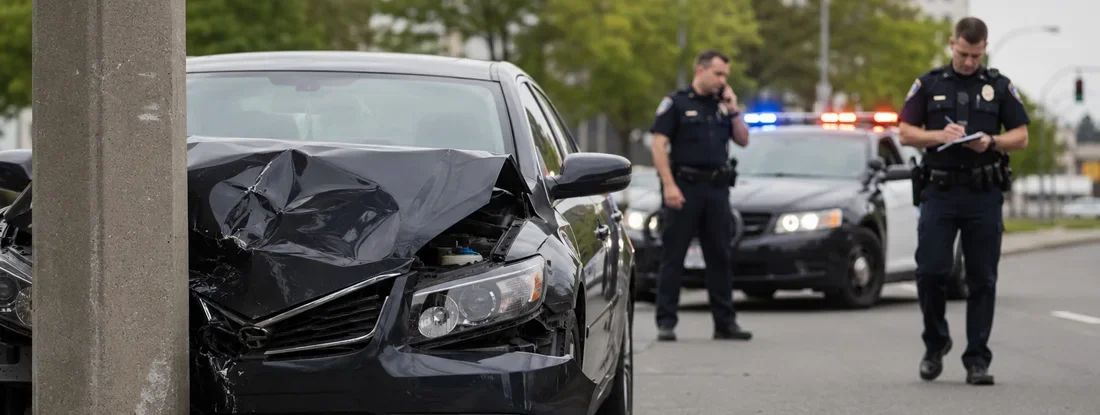
Accidents involving other vehicles aren't the only risks you have to consider as a responsible driver. While your car insurance policy can protect you from multiple types of collisions, it's critical to know you have the right type of coverage first. If you ever hit a stationary object like a telephone or power line pole, you'll want to be certain you're properly covered with collision insurance in your auto policy.
Luckily, a local independent insurance agent can help review your policy with you to be sure you have all the coverage you need, including collision insurance. They can also get you set up with any additional coverage you may want to add to your policy. But first, here's a closer look at when and how car insurance can cover hitting a pole.
Key Takeaways - Does Car Insurance Cover Hitting a Pole in 2026?
Collision car insurance can cover the cost of physical damage to your vehicle after hitting a pole.
Liability car insurance can cover the cost of damage to the pole you hit with your vehicle.
Car insurance companies consider hitting a pole as a single-vehicle at-fault accident, and you'll likely see a premium rate increase if you file a claim.
If the extent of the damage only slightly exceeds your policy's deductible, filing a claim typically isn't worth it.
Working with a local independent insurance agent is strongly recommended, as they can shop and compare car insurance quotes and coverage options from multiple carriers near you to find the best deal.
Which Coverage Pays When You Hit a Pole?
The type of car insurance that pays for physical damage to your vehicle after you hit another object, including a pole, is collision coverage. While no one intentionally hits a pole, unfortunately, it happens. Most people might think that car insurance will automatically cover hitting a pole, especially if the factors that led to you hitting the pole were out of your control. However, insurance will only cover hitting a pole if you have collision coverage included in your policy.
- Collision coverage: Pays for damage to your car from a collision with another object, such as a pole, regardless of fault.
While collision coverage is optional and goes beyond the legal minimum requirement for car insurance in many states, it can be a good idea to have it for situations just like this. Additionally, drivers in nearly all states are required to have a minimum amount of liability coverage, which could cover damage to the pole itself.
Liability insurance can pay for repairs or replacements to third-party property, so it could reimburse you for the cost of repairs to the pole you strike with your vehicle. The table below compares which types of car insurance cover stationary object collisions and how.
| Type of Car Insurance | Covers | Required? |
|---|---|---|
| Collision Coverage | Physical damage to your vehicle after a collision with another vehicle or object. | Usually optional, unless your vehicle is financed or leased. |
| Liability Coverage | Damage to another person's property, such as a vehicle, fence, or utility pole, that you cause with your vehicle. | Yes, in most states. |
| Comprehensive Coverage | Physical damage to your vehicle caused by non-collision events, such as theft, vandalism, fire, hail, or falling objects. Does not apply in this scenario. | Usually optional, unless your vehicle is financed or leased. |
How Is Hitting a Pole Covered by Car Insurance?
If you have collision insurance and you hit a pole, the first thing you want to do is call your independent insurance agent or your insurance company and file a claim. They'll open a claim, investigate the accident, and determine whether they'll cover the incident. You should also contact the local police department right away so they can investigate the damage. Your insurance company will likely request a copy of the police report from you when you file a claim.
If your insurance company determines that you will be covered under your policy, they will work with you to send your car to an approved body shop to get the damage fixed. From there, you just need to sit back and wait to hear from your insurance company. They'll work directly with the body shop to get your car fixed, and you'll be notified when your car is ready to be picked up.
Remember that you'll have to pay your collision insurance deductible before any insurance coverage kicks in. So, if the cost of damage is $2,000 and you have a $500 collision deductible, your insurance company will pay up to $1,500 toward the repairs if your claim is approved.
Your liability coverage may also kick in to cover the cost of damage to the pole you hit. The quick checklist below shows what to do after hitting a pole with your car.
What to Do After Hitting a Utility Pole
Stay Inside Your Vehicle
If you're near a damaged utility pole or downed power lines, remain inside your vehicle until emergency responders say it's safe to exit.
Call 911
Report the accident immediately so police and the utility company can respond.
Take Photos
Document damage to your vehicle, the utility pole, and the surrounding area when it's safe to do so.
Contact Your Independent Agent
Notify your insurance agent as soon as possible and discuss your coverage options.
File Your Insurance Claim
Submit your claim promptly and request a copy of the police report for your records.
How Much of the Damage to My Car Is Covered After Hitting a Pole?
Your insurance may cover all of the damage to your vehicle, up to your collision coverage limit, minus your deductible. Collision coverage has a stated limit, which is the maximum amount your policy will pay for a covered claim. Usually, the limit is the actual cash value (ACV) of the vehicle at the time of the accident. As long as the damage from hitting the pole does not cost more than the value of your vehicle, then your insurance may cover the full amount of the repairs.
The average cost of collision insurance in 2026 is $464 per year, or about $39 per month. So, what is the average collision deductible in 2026? Most drivers select a $500 deductible for collision insurance. If you drive a financed vehicle, your lender typically caps deductibles at $500-$1,000.
Whatever the price of the damage, you will always have to pay your deductible first. You may have opted for a higher deductible amount so your policy would have lower premiums, which means you'll have to pay more out of pocket before receiving reimbursement from your carrier for a claim.
How Much Do I Have to Pay If Car Insurance Doesn't Cover All the Damage?
As long as you have collision coverage and the damage to your car is not more than the actual cash value of your car, your car insurance should cover the total cost of the damage.
However, say that your car has a low actual cash value, like $5,000, and the damage to your car is $7,000. You would owe the difference between your policy limit ($5,000) and the cost of damage ($7,000). At this point, it's likely the car is not even worth fixing. It would be declared a total loss.
In this scenario, your insurance company may offer to send you a check for the total value of your car minus your deductible. If you had a loan or lease on the vehicle and still had more left to pay on it than its current ACV, gap insurance could reimburse you for this difference.
Gap insurance is critical for financed vehicles in their first few years of ownership. Otherwise, if you have the proper coverage, your claim is approved, and your car isn't totaled, you shouldn't owe any more than your deductible.
If Car Insurance Won't Cover Hitting a Pole, What Will?
Collision insurance should cover scenarios in which your vehicle hits a pole. You may want to consider getting a "full coverage" car insurance policy, which often includes liability coverage, collision coverage, and comprehensive coverage, which pays for damage to your car due to a non-collision event, such as a flood or theft. Comprehensive insurance doesn't cover you when you hit a pole, as it's designed to cover damage arising from non-collision events, including vandalism.
| Type of Coverage | Covers |
|---|---|
| Collision Coverage | Physical damage to your vehicle caused by a collision with another vehicle or object, including utility poles, regardless of who is at fault. |
| Comprehensive Coverage | Physical damage to your vehicle resulting from non-collision events, such as theft, vandalism, hail, floods, or falling objects. |
| Liability Coverage | Bodily injury and property damage you cause to other people or their property. |
An independent insurance agent can better help you understand the differences between collision vs. comprehensive coverage. It's essential to be equipped with collision coverage for pole accidents. However, liability coverage can also be essential for covering damage to the actual pole.
Do I Have to Report the Incident to the Police?
If you hit a pole with your vehicle, it's critical to contact the police ASAP from the scene. Fleeing the scene can be considered a hit-and-run, which is illegal. You may be ordered to compensate the city for damage to the pole.
Additionally, if you strike a utility pole, such as an electrical power pole or telephone pole, there can be an immediate risk of being electrocuted if you step out of your vehicle onto the ground. Make sure to call the police from inside your vehicle and remain there until help arrives. Your independent insurance agent can assist you with filing a car insurance claim for hitting a utility pole.
Most states require you to report accidents to the police if the damage exceeds a threshold of $500-$1,000. Even if you feel you've had a minor collision with a pole, it can be helpful to file a police report anyway, just in case.
Will My Car Insurance Rates Go Up After Hitting a Pole?
Unfortunately, if you hit a pole with your vehicle, your car insurance rates will likely increase. This is because car insurance companies often categorize hitting a pole as a single-vehicle accident that's the driver's fault. The national average car insurance rate increase for a single-vehicle accident is 49%.
Certain carriers increase your premium rates after filing a claim more than others, however. After a single at-fault accident, Travelers increases premiums by an average of 46%, Progressive by 59%, and Nationwide by 70%. So, the answer to "How much does insurance go up after hitting a pole?" depends largely on your carrier.
Your car insurance rates will increase even more if you were driving under the influence of a substance or speeding when you struck the pole, which could lead to you also receiving a citation for a moving violation. The more traffic violations and accidents on your driving record, the more expensive your car insurance will become. However, a local independent insurance agent can help you find the most affordable single-vehicle accident insurance near you.
When Should I Not File a Claim After Hitting a Pole?
If the damage to your vehicle after hitting a pole only slightly exceeds your deductible, paying out of your own pocket can help avoid a multi-year surcharge to your policy's premiums. If the damage doesn't exceed your deductible, you won't be able to successfully file a claim at all.
For example, if the total damage from hitting the pole is $600 and your policy's collision deductible is $500, this leaves you with a maximum reimbursement of $100 from your insurer. However, filing the claim could trigger a 49% increase in your premiums for the next three to five years. For many people, this likely isn't worth it.
What Does Accident Forgiveness Cover After Hitting a Pole?
Accident forgiveness coverage prevents a first at-fault accident from raising your premium rates. This coverage must be purchased or earned before the incident occurs to apply. Further, accident forgiveness isn't offered in all states. Erie and Auto-Owners are two major car insurance companies that provide favorable accident forgiveness programs. Ask your independent insurance agent for help finding accident forgiveness coverage for a pole accident.

FAQs About Hitting a Pole and Car Insurance
Does car insurance cover hitting a telephone pole?
Yes, collision coverage pays for physical damage to your vehicle after a collision with another vehicle or object, including telephone and utility poles. Liability coverage can pay for damage to the pole itself.
Is hitting a pole considered an at-fault accident?
Yes, insurers classify nearly all single-vehicle accidents, including hitting a pole, as at-fault because no other party caused the collision.
Will my rates go up after hitting a pole if I don't file a claim?
No. If you pay the repair costs out-of-pocket without filing, your insurer does not learn of the incident and your rates are unaffected. This approach makes financial sense when repair costs only slightly exceed your deductible.
Does liability cover the damage to the pole I hit?
Yes, property damage liability coverage pays for repairs or replacement of the pole you struck, up to your policy limit and with no deductible on your side.
How long will my insurance rates go up after hitting a pole?
A single at-fault accident typically raises your premium for 3 to 5 years. Rates return to normal once the accident drops off your driving record, provided you maintain a clean record during that period.
What should I do immediately after hitting a pole?
Stay in your vehicle if you struck a utility pole due to the electrocution risk from downed wires, call 911, document any damage with photos, obtain the police report number, and then contact your independent insurance agent to initiate the claims process.
Does hitting a pole count as a collision or comprehensive claim?
Always a collision claim. Comprehensive covers non-collision events such as theft, hail, fire, or striking a large animal. Hitting a stationary object like a pole is always filed under collision coverage.
Can I avoid a rate increase after hitting a pole?
Yes. Your options for avoiding a rate increase include paying out of pocket if the damage amount is close to your deductible, using accident forgiveness coverage if you already have it on your policy, and comparing rates across several carriers at policy renewal since surcharges vary widely. An independent insurance agent can run those comparisons on your behalf.
Why Work with an Independent Insurance Agent?
Independent insurance agents know exactly which types of auto insurance you need to protect against various incidents, including hitting a pole. They can shop and compare policies and rates from multiple carriers in your area to find you the best deal.
Your agent can also compare post-accident rates across multiple carriers to find the lowest rate, since surcharge levels vary significantly by insurer. And down the road, your agent can even file car insurance claims for you and update your coverage when necessary.
Sources
https://www.progressive.com/answers/does-car-insurance-cover-hitting-a-pole/
https://www.moneygeek.com/insurance/auto/coverage/collision/#how-much-does-it-cost
https://www.thezebra.com/auto-insurance/accidents/