

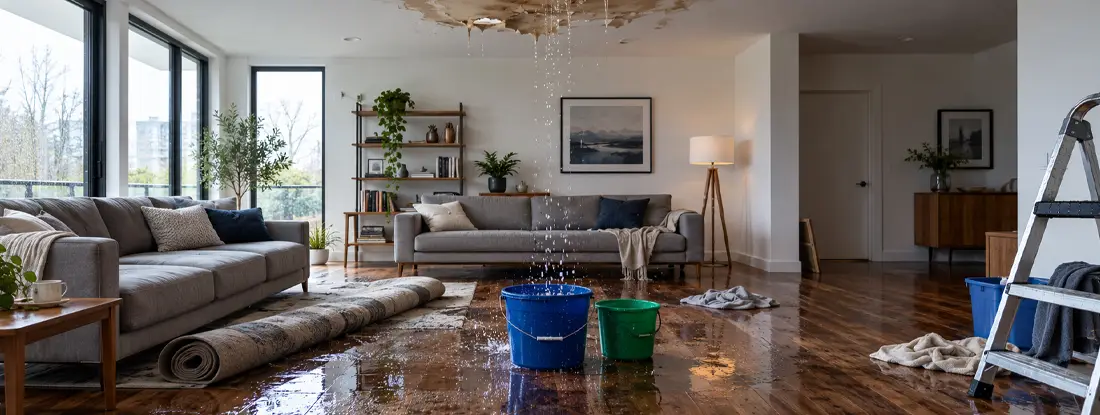
Your renters insurance mold coverage applies depending on the cause of the mold, not the type of mold present in the home. If mold growth is caused by a covered peril, such as a burst pipe, renters insurance will likely cover the damage and remediation. However, there are other causes of mold growth and damage that are not typically covered by renters insurance.
Luckily, an independent insurance agent can help you find the right renters insurance. They can also help explain your policy's coverage to you if you have further questions. However, we'll start with a breakdown of the answer to, "Does renters insurance cover mold?" and how your coverage applies.
Key Takeaways - Does Renters Insurance Cover Mold Damage in 2026?
Renters insurance covers mold damage caused by sudden and accidental perils, such as burst pipes.
Renters insurance typically doesn't cover mold caused by the tenant's negligence, such as leaving wet towels on the floor for extended periods.
Structural mold damage, failed property maintenance leading to mold growth, and pre-existing mold are all considered the landlord's responsibility.
Working with an independent insurance agent is strongly recommended, as they can shop and compare renters insurance policies from multiple carriers near you to find the best rate and fit.
When Does Renters Insurance Cover Mold?
There are some cases in which renters insurance covers mold, and they all relate to the cause of the mold being due to a covered peril. Let's say the mold formed because of a leaking pipe, and it ruined a piece of personal property covered by your policy. In that scenario, you'd likely be covered. However, if the mold was caused by external flooding, you wouldn't have coverage under a renters insurance policy. Further, pre-existing mold in the home won't be covered by your renters insurance.
This logic applies to any named peril that leads to mold. If the wind broke a window in your home and exposed your belongings to rain that eventually led to mold, you'd be covered even though it's external water damage. Similarly, if a fire damaged your home's structure to the point that your personal property got exposed to the elements and mold formed, the incident should be covered in terms of both the fire damage and the mold damage.
So, when does renters insurance cover mold damage? Basically, if any of the perils covered under renters insurance lead to mold, a claim is likely to be approved. The cause of the mold typically must be a sudden and accidental peril. An independent insurance agent can further explain when renters insurance covers mold damage. We'll also break down common scenarios in greater detail below.
Common Covered Perils That Lead to Mold Claims
Renters insurance mold coverage applies when the cause of the mold stems from a listed peril. The following perils are often covered by most HO-4 renters insurance policies.
| Renters Insurance Covered Perils | |
|---|---|
| Fire and lightning | Burst or frozen pipes |
| Smoke damage | Theft and vandalism |
| Windstorms and hail | Riot and civil commotion |
| Explosions | Certain accidental discharge or overflow |
| Falling objects | Weight of snow, ice, and sleet |
Typically, any named peril that creates mold can lead to a covered claim. Remember that pre-existing mold in your unit will not be covered, even if it was originally caused by a covered peril.
When Renters Insurance Doesn't Cover Mold
Renters insurance policies have several listed exclusions for mold damage. The most significant exclusion is flood damage. Flood insurance is separate from renters insurance. So, if your mold damage can be traced to external flooding, it's very likely that your renters insurance claim wouldn't be covered, and you'd have to file through your flood insurance.
Another exclusion is where the mold grows due to your negligence or lack of home maintenance. An example of this could be if you left wet towels lying around for weeks, and they led to the growth of mold in the apartment. Your carelessness caused the damage, so you're responsible for it.
Renters insurance mold exclusions can apply to accidental discharge or overflow. Some carriers exclude mold coverage if the water overflow itself was caused by mold or fungus. Mold coverage in renters' insurance also typically won't apply to mold caused by natural flooding events, such as hurricanes or tsunamis. You'll likely need a separate flood insurance policy to be covered.
Mold growth and damage caused by a sewer backup or sewer line break are also typically excluded by renters insurance. However, you may be able to purchase a separate sewer backup endorsement or rider to add to your policy to get this coverage. Ask your independent insurance agent about any potential mold damage exclusions you're concerned about.
Does Renters Insurance Cover Loss of Use During Mold Remediation?
Loss of use renters insurance mold coverage applies when your unit becomes temporarily uninhabitable due to a covered peril that causes extensive mold growth. Loss of use or additional living expenses coverage can pay for hotel stays, takeout meals above normal spending, and other temporary living expenses, such as additional commute costs.
Your loss of use renters insurance mold coverage applies up to your policy's limits, which may be a per-day dollar amount or a set period of time. Remember that loss of use coverage doesn't apply when mold results from natural flooding. An independent insurance agent can review your renters policy's loss of use coverage terms and limits before an incident occurs.
Does Renters Insurance Cover Black Mold?
Black mold, also known as Stachybotrys chartarum, is not treated any differently by insurers than other types of mold growth. A renters insurance mold claim for black mold can be approved if the cause of the growth was due to a listed peril, similar to any other type of mold.
Listed-perils coverage applies regardless of the type of mold in your home. However, black mold, specifically, tends to develop slowly in damp conditions, and these typically fall under the negligence or gradual moisture exclusion in renters policies. But if a covered peril caused black mold to grow, your renters insurance mold claim will likely be approved.
If black mold growth results from a landlord's failure to properly maintain the property, they may be responsible and held liable under their landlord insurance. Be sure to raise any black mold concerns with your landlord and independent insurance agent immediately to ensure proper compensation.

When Are Landlords Responsible for Mold?
If a mold infestation was caused by a busted pipe or leaking roof, your landlord would likely be responsible for covering the damage. The structure of the property is the landlord's responsibility to maintain, so incidents related to faulty plumbing or roofing, as well as pre-existing conditions, aren't your concern as a tenant. The landlord is also typically responsible for all common areas and maintenance failures.
Further, remember that renters insurance is only designed to cover your personal belongings, not the structure of your rented home. It can be more complicated if the landlord's negligence in maintaining the property leads to damage or destruction of your personal property by mold. Many lease agreements dictate that the landlord isn't responsible for a tenant's personal property.
Further, a renters insurance claim for damaged personal property by mold unrelated to a water damage claim will likely be denied. In this incident, you may have to demand compensation or take legal action against your landlord to get reimbursed for your affected personal belongings. Your independent insurance agent can also advise when you need to take legal recourse to be compensated for damaged personal property or when you can file a renters insurance claim.
Who Pays for Mold Inspection Costs?
Your landlord is also responsible for covering the costs of mold inspections. Mold inspections are never the tenant's responsibility. The landlord or rental property company will cover any expenses related to necessary mold inspections, whether they're routine or related to a specific incident.
Standard renters insurance policies don't cover mold inspection costs, even when the mold results from a covered peril. However, some policies may include compensation for mold inspection as part of the payout for a covered claim. Be sure to review your renters insurance mold inspection coverage with the help of an independent insurance agent.
How Much Coverage Does Renters Insurance Provide for Mold?
Coverage limits in standard renters insurance policies might impose stricter limits for mold damage claims than for other types of claims. Often, you might not be able to receive reimbursement for any greater amount than a few thousand dollars. While this amount is sufficient for some mold claims, it may not be enough for all of them.
If you have valuable property like jewelry or electronics, remember that these items already have lower coverage limits. However, you can increase your coverage for valuable items by adding endorsements or floaters and listing each specific belonging on your policy. Your independent insurance agent can help you increase your renters insurance mold coverage for valuable items and other types of personal property. They can also help you file renters insurance mold claims if necessary.
How to Add a Mold Endorsement to Your Renters Policy
Some carriers offer a limited mold endorsement for renters insurance policies that extends coverage for mold and fungi remediation beyond standard policy terms. Be sure to review your renters insurance mold coverage on your policy's paperwork and look for terms such as "mold," fungi," mildew," "spores," and "mycotoxins." Your independent insurance agent can also help you better understand the mold coverage in your renters insurance policy.
How to Prevent Mold in Your Rental
The U.S. Environmental Protection Agency (EPA) recommends you take the following steps to minimize the risk of mold growth in your home:
- Report all plumbing leaks and moisture problems to the landlord immediately.
- Dry wet or damp materials within 24 to 48 hours to prevent mold growth.
- Keep indoor humidity below 60%, ideally between 30% and 50%.
- Use a dehumidifier in basements.
- Run exhaust fans while cooking or showering.
- Vacuum regularly, since mold's primary food source is dust.
Acting quickly can also increase the likelihood of any future insurance claims being approved by your insurer, since it demonstrates that the renter took reasonable precautions. Your independent insurance agent can help review your renters insurance mold coverage with you and recommend additional steps to mitigate the risk of claims.
FAQs About Renters Insurance and Mold
Does renters insurance cover mold caused by a burst pipe?
Yes, standard renters insurance policies cover mold growth and damage caused by sudden and accidental perils, such as burst pipes.
Does renters insurance cover mold remediation costs?
Yes, renters insurance can cover mold remediation costs if the cause of the mold was due to a covered peril. However, renters insurance won't cover mold remediation if the mold was pre-existing in the home or was caused by a non-covered peril.
Does renters insurance cover black mold damage?
Yes, renters insurance can cover black mold damage, as long as the black mold was caused by a listed peril.
What happens if mold makes my rental uninhabitable?
Your renters insurance policy's loss of use or additional living expenses coverage can pay for hotel stays, takeout meals, and other temporary costs if mold causes your home to become temporarily uninhabitable. Coverage will only apply if the cause of the mold was due to a listed peril.
Can I add mold coverage to my renters insurance policy?
You might be able to add a mold and fungi coverage endorsement to an existing renters insurance policy. An independent insurance agent can help.
Who is responsible for mold damage in a rental: the landlord or tenant?
This depends on the source of the mold. If the mold was caused by neglected property maintenance, the responsibility would fall on the landlord. However, if the mold was caused by a burst pipe or another sudden and accidental peril, the renter could file a claim through their renters insurance.
Does renters insurance cover mold from a sewer backup?
Typically, issues related to sewer backups are not covered unless you have added a sewer backup endorsement to your policy. Your independent insurance agent can help you add a sewer backup endorsement to your renters insurance.
Does renters insurance cover a mold inspection?
No, standard renters insurance policies never pay for mold inspection costs. However, you may receive compensation for a mold inspection as part of a covered claim payout.
Why Work with Independent Insurance Agents?
Independent insurance agents make the process of finding the right renters insurance simple. Independent insurance agents compare renters insurance mold coverage options across multiple carriers, help identify mold-specific sublimits before a claim occurs, assist with adding mold endorsements or floaters for high-value items, and provide claim guidance if a mold incident arises.
Also, they'll still be there in the future to help update your coverage when necessary. Work with a local independent insurance agent to find the right renters insurance mold coverage today.
Sources
https://www.valuepenguin.com/does-renters-insurance-cover-mold
https://www.progressive.com/answers/does-renters-insurance-cover-mold/
https://www.thezebra.com/renters-insurance/coverage/does-renters-insurance-cover-mold/
https://www.epa.gov/mold/brief-guide-mold-moisture-and-your-home