

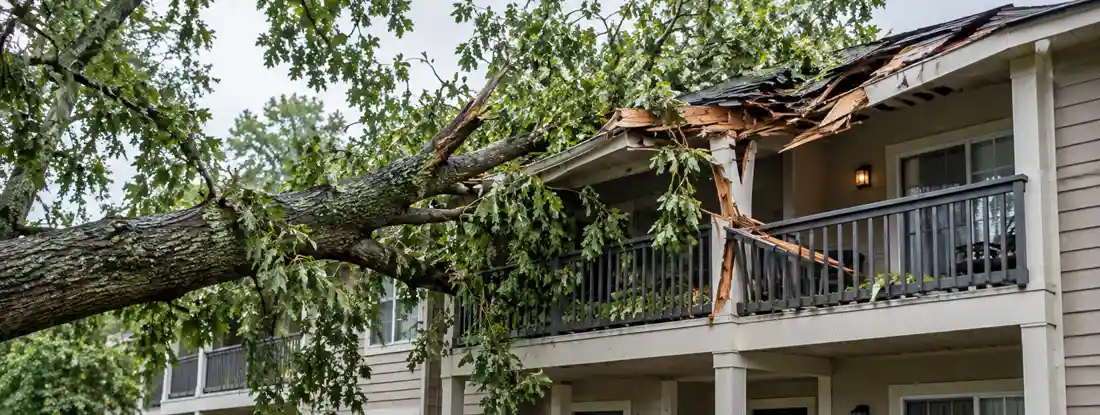
Renters insurance includes coverage for many types of personal property damage. While renters insurance isn't designed to cover property damage related to the structure of the unit or house you rent, it can pay to repair or replace your personal belongings after a covered loss. Renters insurance also provides liability coverage if you accidentally damage a third party's property.
An independent insurance agent can also help you get set up with all the renters insurance property damage coverage you need. They can even help you review your existing policy to be sure of what's covered and what's not. But until then, here's a full breakdown of the answer to, "Does renters insurance cover property damage?" and what you can expect from your policy.
Key Takeaways - Does Renters Insurance Cover Property Damage in 2026?
Renters insurance covers damage, destruction, theft, and vandalism to your personal property, including clothing, furniture, and electronics.
Renters insurance also covers your personal liability if you accidentally damage a third party's personal property.
Your renters insurance liability coverage may reimburse your landlord for accidental damage to your unit's structure.
Working with a local independent insurance agent is strongly recommended, as they can shop and compare renters insurance policies from multiple carriers near you to find the best rate and fit.
What Types of Property Damage Does Renters Insurance Cover?
Generally speaking, renters insurance covers your personal property and liability. Renters insurance liability coverage applies if you're found liable for causing accidental bodily injuries or personal property damage to another person who takes legal action against you.
Renters insurance personal property coverage can reimburse you when a named peril, such as a fire, theft, or vandalism, damages or destroys your belongings. Standard renters policies also include loss of use and medical payments coverage. Review your policy with an independent insurance agent to find out more about what is covered under renters insurance.
However, renters insurance generally won't cover either intentional or negligent property damage to your actual unit or rented house. Additionally, the unit itself is covered under your landlord's insurance policy, not renters insurance. So, if you've been wondering how renters insurance covers damage to apartments, the truth is that structural damage always falls under the landlord's policy. However, your renters policy can cover your personal liability if you're found responsible for the damage.
Does Renters Insurance Cover Personal Property Damage?
Your personal property is covered against damage, loss, and destruction caused by listed perils under renters insurance. You may have wondered, "Does renters insurance cover theft?" Renters insurance personal property coverage covers theft and vandalism of your personal belongings. Listed perils named on standard renters insurance policies include:
- Fire and smoke
- Lightning strikes and resulting fires
- Windstorms and hail
- Theft and vandalism
- Snow, ice, and sleet
- Damage from roof collapses
- Falling objects and trees
- Busted or frozen pipe damage
- Damage from certain types of explosions
- Riots and civil commotion
- Aircraft and vehicle damage
- Sudden HVAC discharge
- Volcanic eruption
Most renters insurance policies come standard with a personal property coverage limit of $25,000. Because you could have significantly more or less property to cover than other individuals, be sure to discuss coverage options and policy limits with your independent insurance agent. They can help you adjust your renters insurance property damage limits.
Does Renters Insurance Cover Personal Property Away from the Home?
Yes, to an extent. Even if your personal property gets damaged or destroyed due to a covered loss outside of your primary residence, your renters insurance will often pay out 10% of the policy's contents coverage limit to cover those losses. So, if your policy included $25,000 in personal property coverage, you could receive up to $2,500 for property damaged or destroyed by a named peril outside of your primary residence.
Luckily, renters insurance personal property coverage applies to items kept in a storage unit and belongings that are with you, whether you're traveling or commuting to work. It can also cover incidents of theft of your personal property while you're away from home. However, remember that if your property is lost or stolen away from your home, you won't receive reimbursement up to your full policy limit, but you can still recover something.
Renters insurance off-premises coverage primarily protects against theft and select named perils, but not all covered perils. So, if your laptop was stolen from a coffee shop or your locked bicycle was stolen from outside your building, these incidents would likely be covered by your policy. You'll also still have to pay your deductible when you file off-premises theft or damage claims.
If you're still asking, "When does renters insurance cover theft away from the home?", a local independent insurance agent can help review your off-premises coverage limits and advise on whether additional coverage is a good idea.
Does Renters Insurance Cover Carpet and Flooring Damage?
Renters insurance covers accidental carpet or flooring damage, such as burns, stains, and pet claw marks. These incidents are covered under your renters insurance liability coverage section. However, if you've been asking, "Does renters insurance cover carpet damage from typical wear and tear?", the answer is typically no. Gradual wear and tear damage falls under the landlord's responsibility in most states.
Renters insurance covers pet damage under its liability section, not your personal property coverage. So, if your dog badly scratches your unit's floors, you might be protected by your personal liability coverage. An independent can help review your personal liability coverage limits in your renters policy if you have pets.
Does Renters Insurance Cover Holes in Walls?
A renters insurance policy protects your personal property and provides liability coverage, but it doesn't cover the structure of your rented home. Your landlord is responsible for any damage to the unit, not you. That's why they have their own landlord insurance policies. So, if you're still asking, "Does renters insurance cover structural damage?", remember that structural damage falls under the landlord's responsibility.
Your landlord's policy covers any accidental damage to your unit. This would provide coverage if you accidentally put a hole in the wall while moving furniture. However, intentional damage is likely excluded. So if you get angry and punch a hole in the wall, your renters insurance isn't going to cover you, and neither is your landlord's policy, which means you'd have to pay for the repairs.
An independent insurance agent can further explain when renters insurance covers damage to apartments and help you review your renters insurance liability coverage limits.
Will Renters Insurance Cover Intentional Damage?
The answer is no. It's important to be aware that intentional damage is virtually never covered under your renters insurance policy or by your landlord's insurance policy. So, while your landlord's policy would cover negligent damage (i.e., you put a hole in the wall moving furniture), it won't cover damage you caused on purpose. This applies to any part of the unit, including the walls, floors, appliances, and fixtures.
Renters insurance covers accidental and negligent damage in most cases, from a liability standpoint, whereas intentional damage is typically your responsibility to pay out of pocket. Further, gross negligence on your part may also cause your insurer to reduce or eliminate your coverage altogether.
If you're still asking, "When does renters insurance cover accidental damage?", your independent insurance agent can help review your policy with you.
Does Landlord Insurance Cover Accidental Damage to the Unit?
Yes, landlord insurance covers accidental damage to the building structure and the landlord's property. If the renter's negligence or an accident caused the damage, their renters insurance liability coverage may reimburse the landlord for the repairs. Remember that renters insurance doesn't cover structural damage, and this aspect of the building always falls under landlord insurance.
Renters Insurance vs. Landlord Insurance: What Each Covers
It can be helpful to see a full breakdown of when and how renters insurance covers damage to an apartment and when renters insurance liability coverage applies. The following table illustrates which incidents and aspects of the property fall under renters insurance vs. landlord insurance.
| Incident/Property Element | Landlord Insurance Covers? | Renters Insurance Covers? |
|---|---|---|
| Building structure (roof, walls, foundation) | Yes | No |
| Appliances and fixtures that came with the unit | Yes | No |
| The renter's personal property (e.g., furniture, electronics, and clothing) | No | Yes |
| Kitchen fires caused by the renter | No | Yes, liability covers repairs |
| Pet damage to the unit caused by the renter | No | Yes, liability covers repairs |
| Storm damage to the building | Yes | No, covers personal items only |
| Temporary housing for the renter if their unit is uninhabitable | No | Yes, loss of use coverage |
| The renter's liability if a guest is accidentally injured | No | Yes, liability coverage |
| Lost rental income during repairs | Yes | No |
If you're still asking, "Does renters insurance cover structural damage?", review your coverage with an independent insurance agent.
What Property Damage Is Not Covered by Renters Insurance?
Many types of damage aren't covered by renters insurance, including that caused by flooding, mold, and gradual water leaks. The following table breaks down the types of property damage not covered by renters insurance and which coverage applies instead.
| Damage Type | What to Do Instead |
|---|---|
| Flood damage | Buy separate NFIP or private flood insurance |
| Earthquake damage | Add an earthquake endorsement to your policy or buy separate earthquake insurance if you're in a risk zone |
| Pest or rodent damage | Report the incident to the landlord, since it's considered a maintenance issue |
| Mold damage | Notify the landlord immediately, as mold damage may be covered if it's caused by a sudden covered event |
| Intentional damage | Deliberate or fraudulent acts are excluded by all standard renters policies |
| Normal carpet wear and tear | Landlord absorbs the cost as depreciation under most state laws |
| Gradual water leaks | Report leaks to the landlord immediately to avoid personal liability |
| Landlord's building structure | Covered by the landlord's policy unless you caused the damage |
| Power surge damage (without an endorsement) | Add an equipment breakdown or electronics coverage endorsement to your policy |
An independent insurance agent can help you better understand what is covered under renters insurance. They can further explain how to find renters insurance flood damage coverage and answer questions about when renters insurance covers damage to apartments.
Actual Cash Value vs. Replacement Cost for Renters Insurance
It's helpful to understand whether you have replacement cost vs. actual cash value renters insurance coverage. An actual cash value (ACV) policy pays the depreciated current market value of your belongings at the time of loss, while replacement cost coverage pays the full amount required to buy a brand-new equivalent item when the loss occurs.
For example, if you needed to replace a three-year-old laptop, an ACV policy might only pay you $300 for it, while a replacement cost policy could pay the full $900 required to replace it with a comparable new model. Renters with electronics or furniture that's less than five years old can benefit most from replacement cost policies. Remember that you have to pay your renters insurance deductible no matter which type of coverage you have.
An independent insurance agent can help you get set up with the right type of renters insurance personal property coverage. They can also help you upgrade from an ACV policy to one with replacement cost coverage.
How Renters Insurance Liability Coverage Works for Property Damage
Your renters insurance liability coverage can reimburse your landlord for repairs after you cause damage to your unit's structure. For example, if you cause a kitchen fire, pet damage, or water damage from an overflowing tub to your unit's floors, your liability coverage would reimburse your landlord for repairs up to your policy's limit.
Standard renters insurance personal liability limits start at $100,000. However, you might want to increase this limit to $300,000 if you have pets or frequently host guests, or up to $500,000 if you live in a multi-family building.
Remember that you have to pay your renters insurance deductible before receiving any reimbursement when filing a claim. If you suffer from covered personal property damage that barely exceeds your deductible, filing a claim likely isn't worth it, especially given the risk of a premium increase when your policy renews. An independent insurance agent can help advise on when filing a renters insurance claim makes sense.

FAQs About Renters Insurance and Property Damage
Does renters insurance cover accidental damage to your apartment?
Yes. If you accidentally damage the rental unit through a kitchen fire, an overflowing tub, or a guest breaking a fixture, your liability coverage pays the landlord for repairs up to your policy limit. Personal property coverage protects your own belongings, while liability coverage handles damage you cause to the unit itself. An independent insurance agent can further explain how renters insurance covers accidental damage.
Does renters insurance cover carpet damage?
It depends on how the damage occurred. Accidental carpet damage, such as burns, stains, or pet claw marks you caused to the landlord's carpet, is typically covered under your renters insurance liability coverage. However, normal wear and tear from everyday use is not covered by any insurance and is generally the landlord's responsibility under most state tenancy laws.
What property damage is not covered by renters insurance?
Standard exclusions include flood damage, earthquake damage, pest and rodent infestations, mold from gradual moisture issues, intentional damage, normal wear and tear, and damage to the building's structure or the landlord's fixtures. Power surge damage is also excluded unless an equipment breakdown endorsement has been added. An independent insurance agent can help you find alternative renters insurance flood damage coverage.
Does renters insurance cover water damage to your unit?
It depends on the cause of the water damage. Sudden water damage from burst pipes, overflowing fixtures, or accidental appliance floods is generally covered. However, gradual leaks the renter knew about and did not report to the landlord typically aren't covered. Flood damage from external rising water is never covered under a standard renters policy, and a separate flood policy is required. An independent insurance agent can further explain when renters insurance covers water damage and how renters insurance covers damage to apartments.
What is the difference between actual cash value and replacement cost renters insurance?
ACV coverage pays the depreciated current market value of your belongings at the time of a covered loss, while replacement cost pays what it costs to buy a comparable new item today. If your three-year-old laptop cost $1,000 new and is now worth $400 after depreciation, ACV might pay $400 to replace it, while replacement coverage could pay to buy a brand-new equivalent.
Replacement cost policies cost slightly more but deliver a significantly better payout at claim time. An independent insurance agent can help you determine which type of renters insurance personal property coverage you have. They can help you choose between replacement cost vs. actual cash value renters insurance.
How does liability coverage work when a renter damages property?
If you accidentally damage your landlord's property through a fire, flood, or pet damage to the floors, your renters insurance liability coverage pays for the repairs up to your policy limit. Standard renters insurance personal liability coverage limits start at $100,000. This coverage also applies to damage a guest causes to the unit. For minor repairs, it may make more sense to pay out of pocket rather than file a claim.
Does renters insurance cover flood or earthquake damage?
No. Standard renters insurance policies do not cover flood damage or earthquake damage, regardless of how severe the event is. Renters in flood-prone areas should purchase a separate flood insurance policy through the NFIP or a private insurer. Renters in earthquake-prone states should ask their independent insurance agents about adding an earthquake endorsement to their policy or buying a separate earthquake policy.
Why Work with an Independent Insurance Agent?
When you need to get renters insurance, there's no one better equipped to help than an independent insurance agent. These agents help by reviewing your renters policy for coverage gaps, comparing ACV vs. replacement cost options, determining the right renters insurance liability coverage limit based on pets and guests, and identifying whether supplemental flood or earthquake coverage is needed.
Independent insurance agents shop multiple carriers to find the best blend of coverage and cost. They'll make sure you're set up with the right amount of renters insurance personal liability coverage. And they can even help file claims for you or update your coverage down the road.
Sources
https://clovered.com/does-renters-insurance-cover-damage-to-property/
https://www.moneygeek.com/insurance/renters/what-is-renters-insurance-what-does-it-cover/