

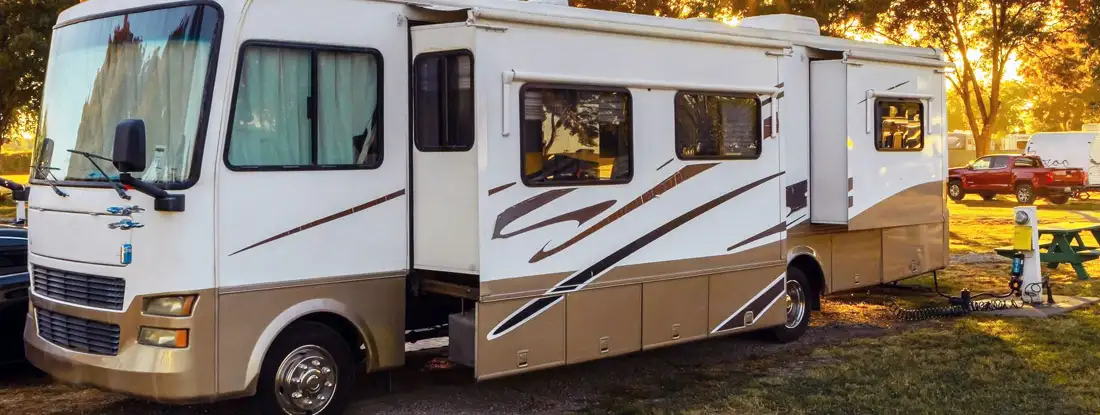
If you just bought or are considering buying a Class A motorhome, you must protect your purchase with the right RV insurance. See our full guide to types of RVs and campers to compare how Class A motorhomes stack up against other options. Your recreational vehicle is your home away from home, and after an accident, weather damage, or theft, you’ll want to be able to restore your RV and get back on the road. Without the proper coverage, you could end up paying hefty costs out of your own pocket for repairs, liability, etc.
Luckily, a local independent insurance agent can help you get set up with all the Class A motorhome insurance you need. They'll get you matched to the ideal policy for your specific vehicle. Here's a closer look at Class A motorhome insurance, what it covers, how much it costs, and more.
Key Takeaways - Class A Motorhome Insurance: 2026
Class A motorhomes need a special type of RV insurance and are not covered by standard auto insurance policies.
Most states require at least minimum liability coverage for Class A motorhomes before they can be driven on public roadways.
Class A motorhome insurance costs an average of $600 to $3,000 per year, depending on the value of your RV and other factors.
Working with a local independent insurance agent is strongly recommended, as they can shop and compare Class A RV insurance quotes from multiple carriers near you to find the best rate and fit.
Do You Need Insurance for a Class A Motorhome?
In most states, you're required to carry at least basic liability coverage on your RV or Class A motorhome to drive it on public roadways, similar to regular vehicles. Having Class A motorhome liability insurance coverage can reimburse you for expenses related to lawsuits if a third party files a claim against you for bodily injury or personal property damage. Without this coverage, just one lawsuit could be expensive to the point of bankruptcy.
But beyond liability insurance, you'll likely want to consider additional Class A motorhome insurance coverages that can help pay to repair or replace your motorhome for physical damage due to collisions or vandalism. You might also want to get coverage to reimburse you in case you need roadside assistance if your motorhome breaks down while you're out on a trip, in addition to other types of RV insurance.
How Much Does Class A Motorhome Insurance Cost in 2026?
Class A motorhome insurance costs an average of $600 to $3,000 per year, depending on the specific type of RV you have and other factors. So, how much does Class A motorhome insurance cost per month? Coverage ranges from $50 to $250 per month.
The Class A motorhome is the largest class of RV on the road. These vehicles can reach nearly 45 feet in length, sleep up to 10 people, and come with price tags in the millions.
The rate you pay for Class A recreational vehicle insurance can depend on a variety of factors, such as:
- The value of the RV
- The make and model of the RV
- How often the RV is used
- The type and amount of coverage selected
- Your location
- Your personal driving record
- Your prior claims history
Motorhome insurance rates also depend on whether you buy just a standard policy or need additional coverage. An independent insurance agent can help you find the most affordable coverage in your area.
Gas vs. diesel pusher: How your engine type affects your rate
Diesel pusher insurance is typically more expensive because diesel pushers have higher replacement values and more expensive drivetrain repairs. These factors result in higher overall premiums for diesel pusher motorhomes than for gas-powered Class A models.
Class A motorhome insurance costs vary depending, in part, on the type of engine. While Class A motorhomes cost $600 to $3,000 to insure per year on average, a diesel pusher model may be more expensive. An independent insurance agent can help you compare gas vs. diesel pusher insurance costs in your area.
Full-time vs. recreational use: What to expect
People who live in their Class A motorhome for six or more months per year are considered full-time RVers. Full-timer status in your motorhome creates a need for a more comprehensive type of coverage, known as full-time RV insurance for a Class A motorhome.
Full-time RV insurance premiums can be 40% to 100% higher than recreational or seasonal coverage. Since carriers treat full-time motorhomes as primary residences, policies have significantly increased liability and personal property coverage to compensate for the higher exposure. A local independent insurance agent can help you find affordable full-time RV insurance in your area.
What Does Class A Motorhome Insurance Cover?
You may need several types of coverage to complete your Class A motorhome insurance policy, including liability and collision. If you've been asking, "What does Class A motorhome insurance cover?" many RV insurance carriers offer the following coverage options you can choose from:
- Liability coverage: This covers costs related to third-party claims of bodily injury or property damage caused by you and your Class A motorhome. Liability coverage is the state-mandated minimum insurance for motorized RVs in most states.
- Collision coverage: Pays for damage to your Class A motorhome from a collision with another object, regardless of fault.
- Comprehensive coverage: Pays for damage to your Class A motorhome due to a non-collision event such as a flood or theft.
- Personal injury protection: This covers medical expenses, lost income, funeral expenses, childcare, and other costs if you get injured in a collision, regardless of fault. This coverage isn't offered in every state.
- Uninsured/underinsured motorist coverage: This covers costs for collisions, etc., with other drivers who don't carry enough insurance to reimburse you for their portion of the damages properly.
- Medical payments coverage: This covers medical expenses for you and your passengers after a collision, regardless of fault.
An independent insurance agent in your town can help recommend the exact types of Class A motorhome insurance that would best meet your needs. They'll help you review your Class A motorhome insurance coverage options. They can also help you determine how much Class A motorhome liability insurance is required in your state.
Additional Class A Motorhome Insurance Coverage to Consider
Your Class A motorhome insurance policy may not yet be complete. The following additional coverage options might be wise to consider for many motorhome owners:
- Towing and roadside assistance coverage: This covers towing costs and other professional roadside services if your Class A motorhome breaks down on the road.
- Vacation liability insurance: This covers Class A motorhomes used as temporary residences and can cover costs related to physical damage, etc., resulting from collisions and disasters covered by comprehensive insurance. Part-timers especially benefit from having vacation liability coverage.
- Loan/lease gap coverage: This covers the difference between your Class A motorhome's current value and what's owed on your loan or lease if your vehicle is declared a total loss.
- Full-time coverage: Designed for Class A motorhome owners who use their vehicles as permanent residences, this includes similar coverage to a homeowners insurance policy for incidents related to guest injuries and property damage, and higher liability and medical payments coverage limits.
- Emergency expense coverage: This covers emergency expenses like hotel rooms and travel costs if your Class A motorhome breaks down a certain distance away from your home, leaving you stranded.
- Pet injury coverage: This covers vet bills if your pets (i.e., domesticated animals like cats and dogs) get injured while riding in your Class A motorhome.
- Safety glass replacement coverage: This covers the replacement of your Class A motorhome's windshield if it gets damaged or destroyed by a listed peril.
- Personal property and belongings coverage: Sometimes called personal effects coverage, this covers personal property, such as laptops, furniture, cellphones, etc., kept in your Class A motorhome that gets stolen, lost, or damaged by a covered peril. Full-timers can especially benefit from having personal effects coverage.
Your independent insurance agent can help ensure your Class A RV insurance properly covers each aspect of your motorhome, including accessories and after-market add-ons, contents, special valuables, and any towed vehicles.
Agreed value vs. actual cash value: Which is right for your motorhome?
Whether you need agreed value or actual cash value motorhome insurance depends on the value of your RV and your personal finances. Agreed value coverage pays the predetermined full insured amount in the event of a covered total loss, without depreciation. This is the preferred coverage option for owners of high-value Class A motorhomes.
Actual cash value (ACV) coverage pays out the depreciated current market value of the motorhome at the time of a covered total loss. ACV policies may pay significantly less for an older or pre-owned motorhome. An independent insurance agent can help advise on whether to choose an ACV or agreed value policy.
What Is Not Covered by Class A Motorhome Insurance?
Class A motorhome insurance has several common exclusions that you should be aware of before attempting to file a claim. These often include the following:
- Normal wear and tear
- Routine maintenance
- Mechanical breakdown
- Intentional damage
- Commercial use
If you intend to use your RV for commercial purposes, be sure to look into a commercial vehicle insurance policy. Also, to cover mechanical breakdowns, it's critical to add the right RV mechanical breakdown insurance. An independent insurance agent can help you address any additional coverage needs.
How to Save on Class A Motorhome Insurance
There are several easy ways you can score Class A motorhome insurance discounts, such as by following any of these tips:
- Bundle your coverage: If you buy RV insurance and auto insurance or homeowners insurance from the same carrier, you can often earn a bundling discount to save an average of 10%-25% on each policy.
- Complete an approved safety course: Submitting proof of completion of an approved RV safety course to your insurer can help you earn a discount ranging from 5% to 10% from many carriers.
- Install anti-theft devices: Many carriers offer discounts if your RV is equipped with a burglar alarm or other anti-theft devices.
- Store the motorhome securely: If you keep your motorhome in a secure facility during the off-season, your insurer may reward you with a discount.
- Maintain a safe driving record: Keeping your driving history clear of accidents and traffic violations can help you earn a safe driver discount from many carriers.
- Raise your deductible: Increasing your deductible can lead to lower monthly or annual premiums, but keep in mind that you'll have to pay more out of your own pocket if you need to file a claim.
Working with an independent insurance agent is an easy way to compare Class A motorhome insurance quotes from multiple carriers each time your policy renews to keep the best rate. Your agent can help you find the best insurance for Class A motorhomes near you.

FAQs About Class A Motorhome Insurance
How much does Class A motorhome insurance cost per month?
Class A motorhome insurance averages $50 to $250 per month for recreational use in 2026. Diesel pusher owners may pay more per month. Full-timers typically pay 40% to 100% higher Class A motorhome insurance costs than part-time users. If you're still wondering, "How much does Class A motorhome insurance cost?" a local independent insurance agent can help you compare quotes in your area.
Is a diesel pusher more expensive to insure than a gas Class A?
Yes. Diesel pushers carry higher replacement values and more costly drivetrains to repair. This results in higher diesel pusher insurance premiums than those for gas-powered Class A models. An independent insurance agent can help you compare gas vs. diesel pusher insurance costs near you.
Do I need special insurance if I live in my Class A motorhome full time?
Full-time RV insurance for Class A motorhomes is recommended for anyone using their RV as a primary residence for six or more months per year. This coverage adds homeowner-like protections, including higher liability limits and personal effects coverage, which is not available on a standard recreational policy.
What is not covered by Class A motorhome insurance?
Standard Class A policies typically exclude normal wear and tear, routine maintenance, mechanical breakdowns, and intentional damage. Your independent insurance agent can help you identify your policy's specific exclusions and compare additional Class A motorhome insurance coverage options.
What is the difference between agreed value and actual cash value for a Class A motorhome?
Agreed value motorhome insurance coverage pays the full insured amount at the time of a total loss with no depreciation deducted. Actual cash value (ACV) coverage factors in depreciation and may pay significantly less, especially for older coaches. For high-value Class A motorhomes, agreed value coverage is often a better choice.
How can I lower my Class A motorhome insurance costs?
Bundle your RV policy with auto or homeowners insurance from the same carrier, complete an approved RV safety course, install anti-theft devices, store the coach in a secured facility off-season, raise your deductible if you can handle smaller claims out of pocket, and work with independent insurance agents to compare quotes from multiple carriers each renewal.
Independent insurance agents can help you find all the Class A motorhome insurance discounts you qualify for, as well as the best insurance for a Class A motorhome.
Does my auto insurance cover my Class A motorhome?
No. Class A motorhomes are independently driven vehicles that require a dedicated Class A RV insurance policy with tailored liability coverage. A standard auto policy does not extend to a Class A motorhome.
How Independent Insurance Agents Can Help You Find Class A Motorhome Insurance
When shopping for Class A motorhome insurance, enlist the help of a local independent insurance agent. Independent insurance agents simultaneously compare rates from multiple RV-specialized carriers, including Progressive, Foremost, National General, and Good Sam, and can help owners assess whether a recreational or full-time policy best fits their situation. They can also advise on whether to choose agreed value or ACV coverage.
Ultimately, they'll get you matched to a Class A RV insurance policy that offers the right blend of coverage and cost. They'll ensure you get set up with the best insurance for a Class A motorhome. And down the road, your agent can help file RV insurance claims for you if the time comes.
Sources
https://www.progressive.com/rv-trailer/class-a-motorhome-insurance/
https://www.lazydays.com/rv-lifestyle/largest-rvs
https://campaddict.com/luxury-rv/
https://insurify.com/specialty-vehicles/rv/
https://www.valuepenguin.com/best-rv-insurance-companies