

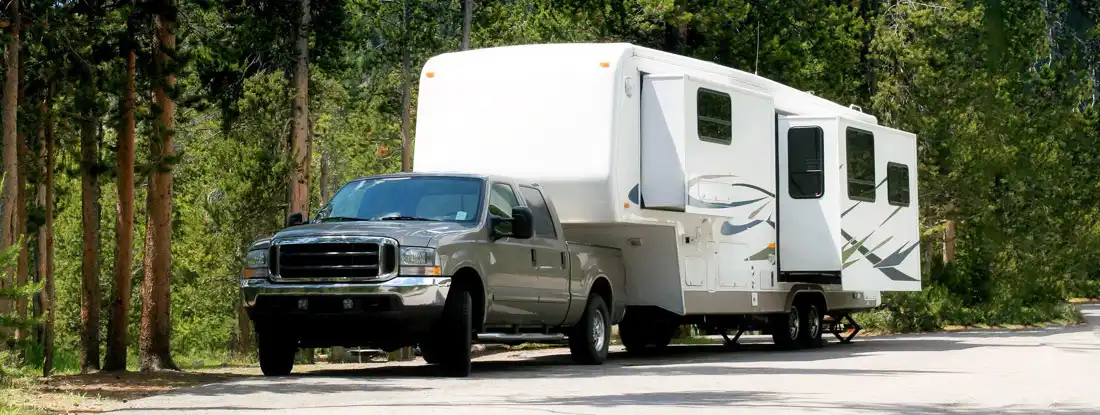
If you own a travel trailer, also known as a conventional trailer or camper trailer, you may need conventional travel trailer insurance or camper trailer insurance to protect your investment. These are expensive trailers that can run anywhere from $11,000 to $100,000 or more, depending on the model and whether you buy it new. Travel trailer insurance policies are fairly affordable and provide important protection against several possible causes of loss before you take off on your next trip.
Fortunately, a local independent insurance agent can help you find the right insurance for travel trailers. They'll shop and compare RV insurance policies to find you the best deal available. But first, here's a breakdown of conventional travel trailer insurance and why it's sometimes necessary.
Key Takeaways - Travel Trailer Insurance: 2026
Travel trailer insurance isn't required by law, but if yours is financed, lenders typically require collision and comprehensive coverage.
Travel trailer insurance costs range from $25 to $50 per month on average in 2026.
Liability coverage may extend from an auto policy to a towed travel trailer, but you'll need additional coverage for other use and for physical damage or theft of the trailer and its contents.
Working with a local independent insurance agent is strongly recommended, as they can shop and compare travel trailer insurance quotes and coverage options from multiple carriers near you to find the best deal.
Is Travel Trailer Insurance Required?
Most states don't legally mandate travel trailer insurance for towable RVs. However, if your trailer is financed, lenders typically require you to have at least collision and comprehensive coverage. That said, even if coverage isn't technically required, a trailer is still an expensive investment that deserves the right protection. Having conventional travel trailer insurance or camper insurance can help you avoid paying tens of thousands of dollars to replace your trailer in the event of a total loss. See our full guide to types of RVs and campers to compare how travel trailers stack up against other options.
Does Car Insurance Cover Travel Trailers?
It depends. Whether or not you can add a travel trailer to your car insurance policy varies from one insurance carrier to another. Many auto policies provide some limited coverage or may completely exclude a travel trailer. Some insurance companies require that you add provisions to your existing auto coverage to include a travel trailer.
By purchasing separate conventional trailer insurance, you can rest assured that you have protection against losses arising from lawsuits and other mishaps. Additionally, this form of insurance can cover your contents and mechanical breakdowns. Even if your car insurance company can extend auto coverage to a conventional trailer, it's still a good idea to review the benefits of a separate travel trailer insurance policy.
Further, auto liability insurance can often extend to trailers only while they're being pulled. However, auto liability insurance doesn't cover trailers against physical damage or theft, nor does it cover contents inside the trailer. A homeowners insurance policy may cover your personal belongings stored inside the trailer at a reduced limit (often 5% to 10% of your total contents coverage), which is insufficient for most RVers. Having a separate travel trailer insurance policy fills critical coverage gaps in collision, comprehensive, liability, and contents.
Does Homeowners Insurance Cover Travel Trailers?
Your home insurance policy doesn't cover your other vehicles, nor does it cover your travel trailer. However, you might find that your home insurance can cover the personal property you store in your travel trailer, such as clothing, equipment, supplies, etc., though at a lower limit than the property stored at your home. You'll likely want a separate travel trailer policy to cover theft, vandalism, and lawsuits related to the trailer itself.
What Does Travel Trailer Insurance Cover?
Travel trailer insurance policies can often be customized depending on your unique coverage needs. In general, full coverage travel trailer insurance often includes the following:
- Collision coverage: Pays for damage to your trailer from a collision with another object, regardless of fault.
- Comprehensive coverage: Pays for damage to your trailer from non-collision events, such as floods or theft.
- Full-timer's liability coverage: Those who live in their trailers full-time may need special liability coverage in case of bodily injury or personal property damage suffered by others in their travel trailer or at their RV campsite.
- Total loss replacement coverage: This can cover the full replacement of your trailer with a brand-new vehicle of the same model year or newer if your vehicle gets totaled due to a covered loss.
- Towing and roadside assistance coverage: This can cover the cost of emergency roadside services, such as towing, if your camping or travel trailer breaks down and leaves you stranded on the road.
- Uninsured/underinsured motorist coverage: This can reimburse you for expenses related to collisions, etc., caused by drivers who don't carry adequate insurance.
- Vacation liability coverage: This protects against third-party claims of bodily injury and personal property damage while your trailer is parked and used as a temporary residence at a campsite.
- Personal property or contents coverage: This protects your personal property, including clothing, electronics, and other items, against theft and damage caused by covered perils. It's also known as personal effects coverage.
- Emergency expense coverage: This pays for hotel stays, travel costs, takeout meals, and other extra expenses if your trailer becomes uninhabitable due to a covered loss while you're on a trip.
Still asking, "What does travel trailer insurance cover?" Your independent insurance agent can help review the specifics of your travel trailer insurance policy. They'll help you get set up with all the protection you need in your travel trailer coverage, including vacation liability coverage for travel trailers and more.
What Conventional Travel Trailer Insurance Doesn't Cover
There are several common travel trailer exclusions to be aware of, such as the following:
- Normal wear and tear
- Intentional damage
- Malicious acts against others
- Nonpermitted use (e.g., racing)
- Certain types of water damage
While sudden and unexpected water damage is covered by comprehensive insurance, slow leaks due to a failed seal or rust are typically not covered. An independent insurance agent can help you further review your policy's specific coverage exclusions.
Full-Time vs. Part-Time Travel Trailer Insurance
People who live in their trailers for at least six months per year are considered full-timers and need increased coverage, especially in the liability category. Full-timers require homeowners-level liability protection, emergency living expense coverage, and enhanced personal property coverage limits. Full-time travel trailer policies typically cost 20% to 40% more than standard recreational coverage.
How Much Does Travel Trailer Insurance Cost in 2026?
Travel trailer insurance costs an average of $25 to $50 per month. So, how much does travel trailer insurance cost per year? It ranges from $300 to $600, on average. Liability-only coverage starts at around $125 per year. However, full coverage for high-value trailers can exceed $800 per year. Full-timers pay an average of 20% to 40% more for their policies than recreational users.
Travel trailer insurance costs can vary depending on numerous factors. Some of the most common factors that can influence trailer insurance rates are:
- The age and condition of the trailer
- The make and model of the trailer
- The trailer’s dimensions
- Your driving history
- Your claims history
- The type and amount of coverage you need
- The policy's deductible amount
Your premiums will often be lower if you use your trailer part-time vs. full-time. You may also qualify for much lower rates if you're eligible for any RV insurance discounts. An independent insurance agent can help you find cheap travel trailer insurance and compare conventional travel trailer insurance quotes from carriers near you.
Best Travel Trailer Insurance Companies
These top-rated RV insurance carriers can provide you with the right kind of insurance for a travel trailer. Check out our list of the best travel trailer insurance companies to find the best RV insurance for travel trailers in 2026.
| Best RV Companies | Best for | Company Rating |
|---|---|---|
| Progressive | Affordability |

|
| Nationwide | Discounts |
|
| Roamly | Full-time RVers |

|
| Good Sam | Part-time RVers |
|
| Allstate | Motorhomes |

|
Methodology: InsuredBetter compared dozens of RV insurance companies and evaluated them on several different criteria, including AM Best rating and financial strength, customer satisfaction scores (J.D. Power surveys and NAIC index), coverage offered, customer service availability, online quotes, and more.
Independent insurance agents can help compare travel trailer insurance quotes from each of these carriers and others near you.

FAQs About Travel Trailer Insurance
Does travel trailer insurance cover water damage?
Water damage can be covered under the comprehensive portion of a travel trailer policy if the damage was “sudden and/or unexpected.” Water damage caused by a leak due to rust or a failed seal is most likely excluded from travel trailer coverage.
Is my parked travel trailer covered?
Your parked trailer may be covered if you purchased a stationary travel trailer program along with your standard travel trailer policy. This form of coverage can be especially vital if you leave your trailer parked in a campground or RV site while hiking or bicycling.
What if I use my travel trailer for my business?
You'll likely need additional coverage if you use your travel trailer to house or operate your business. An independent insurance agent can help you find the right kind of small business insurance to protect you.
Is travel trailer insurance required by law?
Most states do not legally require travel trailer insurance for towable units. If the trailer is financed, lenders typically require comprehensive and collision coverage. Even without a legal mandate, owners of trailers worth $11,000–$100,000+ are strongly advised to carry coverage. But the answer to, "Is travel trailer insurance required by law?" is no.
What is vacation liability coverage on a travel trailer policy?
Vacation liability coverage for travel trailers protects the owner when the trailer is parked and used as a temporary residence at a campground or RV site. For example, if a visitor trips on the trailer's steps or is injured at the campsite, vacation liability coverage can pay for the medical bills and related legal costs. This coverage bridges the gap between auto liability, which applies only while towing and homeowners liability, which does not extend to the trailer.
How can I save money on travel trailer insurance?
You can get cheap travel trailer insurance by bundling your policy with auto or home insurance through the same carrier (10%–25% savings), maintaining a clean driving record (15%–30% safe driver discounts), storing the trailer in a secure facility (10%–25% reduction), or paying the annual premium in full (5%–10% paid-in-full discount). A local independent insurance agent can identify which RV insurance discounts apply and compare quotes across carriers.
Why should I work with an independent insurance agent to find travel trailer insurance?
Independent insurance agents have access to multiple travel trailer insurance companies. They can shop around and compare policies and rates to help you find the best overall deal. And down the road, your agent can even help you file RV insurance claims or update your coverage as necessary.
How an Independent Insurance Agent Can Help You Find the Right Coverage
When you're ready to get equipped with the right RV insurance for your travel trailer, no one's better equipped to help than a local independent insurance agent. These agents have access to multiple insurance companies, so they're free to shop and compare travel trailer insurance quotes and policy options for you. A local independent insurance agent can also identify discounts (e.g., bundling, safe driver, storage, and paid-in-full) to help find cheap travel trailer insurance. And down the road, your agent can help you file RV insurance claims and update your policy when necessary.
Sources
https://www.progressive.com/rv-trailer/travel-trailer-insurance/
https://www.bishs.com/blog/travel-trailer-cost/
https://www.cnbc.com/select/best-rv-insurance/
https://www.roamly.com/learning-center/how-much-does-travel-trailer-insurance-cost
https://www.thezebra.com/other-insurance-types/travel-trailer-insurance/